


Many homeowners face a frustrating reality: even with the air conditioning or heating running at full capacity, they still feel a "heatwave" radiating from the glass in July or a "bone-chilling draft" in January.
The reason is simple but often overlooked. Windows represent more than 30% of your home’s vertical visual space and, more critically, more than 30% of its thermal exchange area. Research indicates that up to 76% of sunlight entering standard windows converts into indoor heat. If you ignore the energy efficiency of your window treatments, you are essentially wasting 30% of your electricity bill.
As we move into 2026, the most significant trend in home design is the perfect marriage of aesthetics and energy conservation. In this guide, we’ll break down the science of thermal insulation, compare the two "heavyweights" of temperature control—Cellular and Roller shades—and show you how the right window treatments can slash your utility bills while elevating your home’s interior design.
The Physics of Insulated Window Shades
To achieve year-round comfort, you need more than just a decorative cover; you need thermal window coverings designed to manage the laws of physics. There are two primary categories of window treatments that excel at this: Cellular (Honeycomb) Shades and Roller Shades.
Cellular (Honeycomb) Shades
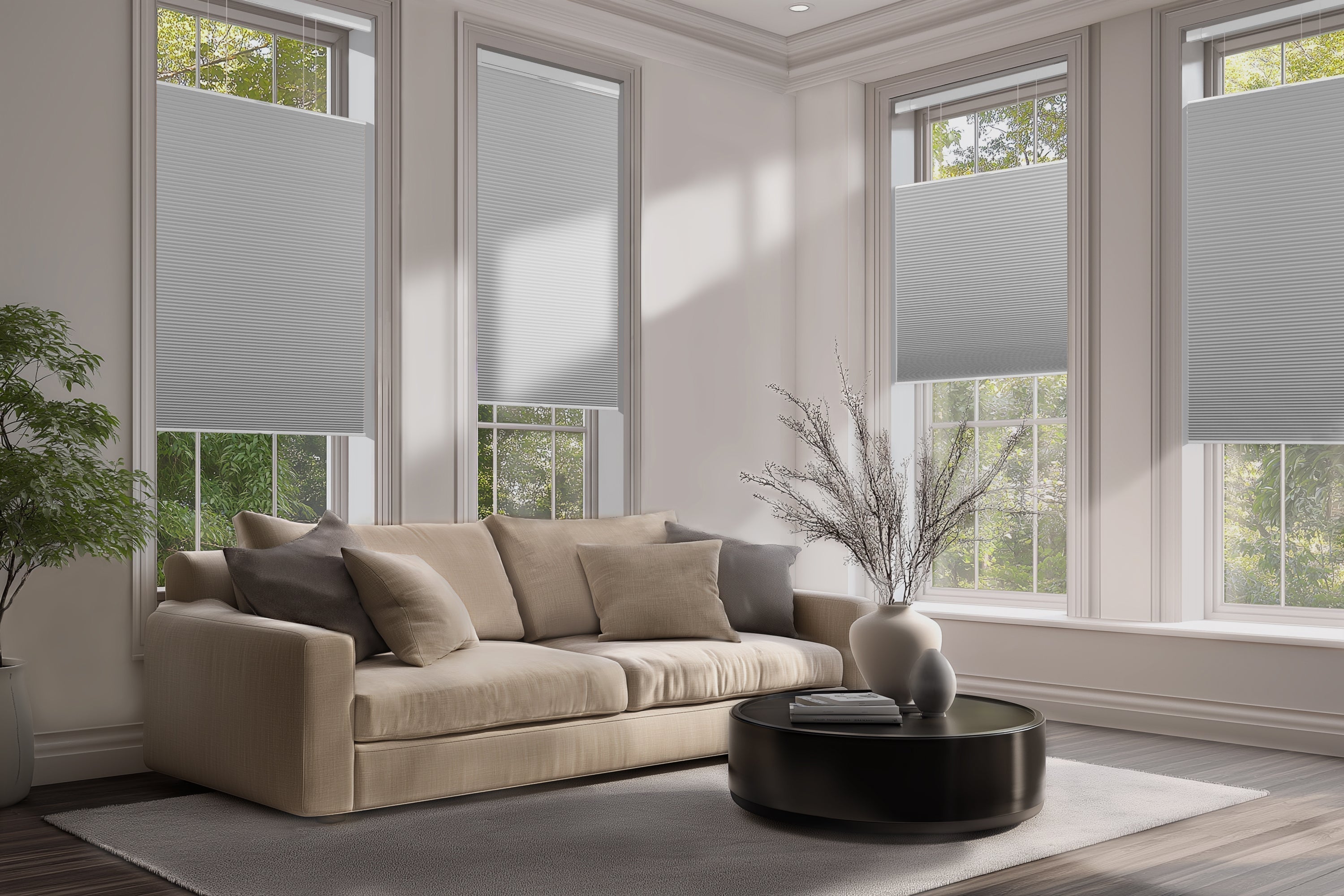
Cellular shades rely on their unique hexagonal honeycomb structure to trap air, forming a permanent thermal barrier that reduces heat conduction. In winter, this prevents indoor heat from escaping toward the cold window glass; in summer, it effectively blocks outdoor heat from conducting through the glass into the room.

Roller Shades
Unlike cellular shades, which insulate by reducing heat conduction, roller shades insulate against heat through reflection and shielding. High-performance roller shades (especially silver-coated or light-colored ones) reflect infrared rays—which carry the majority of solar heat—directly back outdoors, rather than just blocking UV rays. They also use dense, heavyweight fabrics to reduce the amount of light entering the room, and since less light gets in, far less of that light energy turns into heat.

Cellular Shades VS. Roller Shades—Which is Right for Your Space?
Choosing the right window treatment involves more than just picking a color; it’s about balancing performance with lifestyle. To help you decide, we have compared Cellular and Roller shades across four essential dimensions: Thermal Insulation, Style and Aesthetics, Maintenance and Cleaning, and Main Features. Here is the overall comparison summary:

Thermal Insulation
When it comes to climate control, cellular shades are scientifically superior to roller shades. While roller shades primarily rely on reflecting radiant heat, cellular shades utilize their unique physical structure to block the actual conduction of heat through the window.

R-Value
The R-value is a physical measure of a material's resistance to heat flow. Cellular shades typically fall within a high R-value range of 3.0 to 4.5, meaning they offer exceptionally strong resistance to heat transfer. By contrast, roller shades usually have an R-value of only 1.0 to 1.5. Thanks to this high R-value, cellular shades are far more effective at maintaining a steady indoor temperature.
Edge Sealing
Heat tends to escape through gaps around window edges via convection. The way cellular shades are installed allows them to fit snugly against the window frame along the sides, effectively blocking lateral airflow. Roller shades, on the other hand, are constrained by their top roller tube and mounting brackets, which typically leave noticeable side gaps. These gaps trigger unwanted convection that lets hot and cold air circulate between the window and the room.
Structural Effect
Physical structure sets the upper limit of performance. Cellular shades use a three-dimensional, double-layer (or even triple-layer) design that creates a pocket of still air in front of the window—similar to the principle behind double-glazed glass—significantly slowing heat conduction. Roller shades, in contrast, feature a flat, single-layer structure and rely primarily on fabric coatings to reflect radiant heat. When it comes to blocking conductive heat transfer at the molecular level, however, they fall well short of the effectiveness provided by honeycomb air pockets.
Recommendations for Specific Climates
Your local environment plays a massive role in determining which shade will perform best for you.
Cellular shades are the ideal choice in extremely cold or hot regions. In freezing winters, they prevent indoor heat from escaping; in scorching summers, their high R-value acts as a barrier against external heat, significantly reducing your HVAC energy consumption.
Examples:
- Cold Climates: Alaska (Anchorage), Minnesota (Minneapolis), North Dakota (Fargo), and the New England region (Vermont, Maine).
- Hot Climates: Arizona (Phoenix), Nevada (Las Vegas), and the interior valleys of California (Palm Springs).
If you live in a region that is both humid and hot, roller shades, specifically those with high-performance reflective coatings, are more suitable. They offer great heat reflection while being more resistant to moisture and easier to maintain in damp conditions.
Examples:
- Humid Climates: Florida (Miami, Orlando), Louisiana (New Orleans), Texas (Houston), and the coastal areas of Georgia and South Carolina.
Style and Aesthetics
The choice between these two often comes down to the "vibe" of your room. Roller Shades offer a sleek, minimalist, and modern aesthetic that disappears when fully raised, making them perfect for clean-lined, contemporary homes. Our linen-inspired collections further elevate this look, providing an organic, high-end feel.
On the other hand, Cellular Shades provide a softer, more textured look. Their pleated fabric adds architectural interest to a window, and they excel at diffusing harsh sunlight into a gentle, inviting glow that warms up a space without the glare.
Maintenance and Cleaning
Both types are easy to maintain, but their cleaning methods differ based on their construction.
The main goal for cellular shades is keeping dust at bay. We recommend using a vacuum cleaner with a brush attachment on a low setting to remove dust from the pleats. Since the honeycomb cells are open at the ends, you can occasionally use a can of compressed air or a hairdryer (on the cool setting) to blow out any internal debris.
For roller shades, regular wipe-downs are the key. Their flat, smooth surface makes them incredibly easy to clean. Simply wipe them down with a damp cloth or perform regular dusting to keep them looking brand new.
Main Features
Both styles offer unique functional advantages depending on your daily needs.
Cellular Shades are famous for the Top-Down/Bottom-Up (TDBU) feature, which allows you to lower the top to let in natural light and ventilation while keeping the bottom closed for total privacy.

Roller Shades, however, are the "all-rounders" of the window treatment world, celebrated for their exceptional cost-effectiveness and versatility. They offer an incredibly diverse range of fabric choice, ensuring there is an option for every budget and style. Their sleek, low-profile design makes them "effortlessly chic," blending seamlessly into any decor from industrial lofts to traditional cottages.

Editor’s Choice: The Best Energy-Efficient Solutions for 2026
Now that we’ve covered the essentials, let’s explore the best window treatments to keep your home comfortable, energy-efficient, and Instagram-worthy.
1.The "Game Changer": Honeysilk™ Waterproof Cellular Shades
Crafted from self-developed high-tech fabrics, Honeysilk™ cellular shades are soft to the touch, non-toxic, and odorless. Unlike traditional options, they are waterproof, making them durable and suitable for high-moisture areas like bathrooms. They come in 13 colors with matching color-coordinated tracks and various styles (Cordless, TDBU, Day & Night). For those who dread DIY projects, the 30-second no-drill upgrade allows for a professional fit without the hassle or cost of tools.

2. The "Designer’s Dream": Tailor-Made Roller Shades
The Fully Custom Roller Shades collection offers a meticulously customized experience. Beyond just size and color, you can tailor the valance style, track shape, and fabric texture to create a unique look that fits your personal style perfectly.

3. The "Organic Modernist": Linen-Inspired Roller Shades
Linen-inspired roller shades focus on a natural linen aesthetic, paired with a matching valance for a unified, sophisticated visual effect. It is a premier choice for window coverings to keep heat out without sacrificing a breezy, organic interior feel.

Frequently Asked Questions
1.What makes cellular shades the best window covers for winter?
The hexagonal structure acts similarly to the insulation in your home's walls. By creating a barrier of immobile air, they prevent warm air from escaping and stop cold drafts from entering, making them the ultimate window coverings to keep out the cold.
2.Can any type of blind truly block heat, or is this just marketing hype?
While no blind can completely eliminate heat, certain designs are scientifically proven to reduce heat transfer significantly. For example, honeycomb shades trap air to insulate your windows, and roller shades use UV-resistant fabrics to block solar radiation. The key is choosing materials and styles tailored to your climate and window orientation.
3.Do lighter-colored blinds always perform better in summer?
Generally, yes. Light hues like white, beige, or light gray act like mirrors, reflecting sunlight away from the home. Darker shades tend to absorb heat, which can be useful as window coverings to keep cold out in winter but may be less efficient for summer cooling.
4.Are blackout blinds the best option for hot climates?
They are excellent for blocking 100% of light and solar heat transmission. However, for the best results, look for insulated roller blinds with reflective coatings, as these combine the light-blocking power of blackout fabric with heat-reflecting technology
5.Where should I install thermal insulated window blinds?
Thermal insulated window blinds are versatile enough for any part of the home. They are especially effective on large sliding doors, sunrooms, or south-facing windows that endure the most intense afternoon sun.
Share:
Are Motorized Blinds Worth It?
Which Window Shade is Best? Zebra vs. Silhouette® vs. Pirouette®