


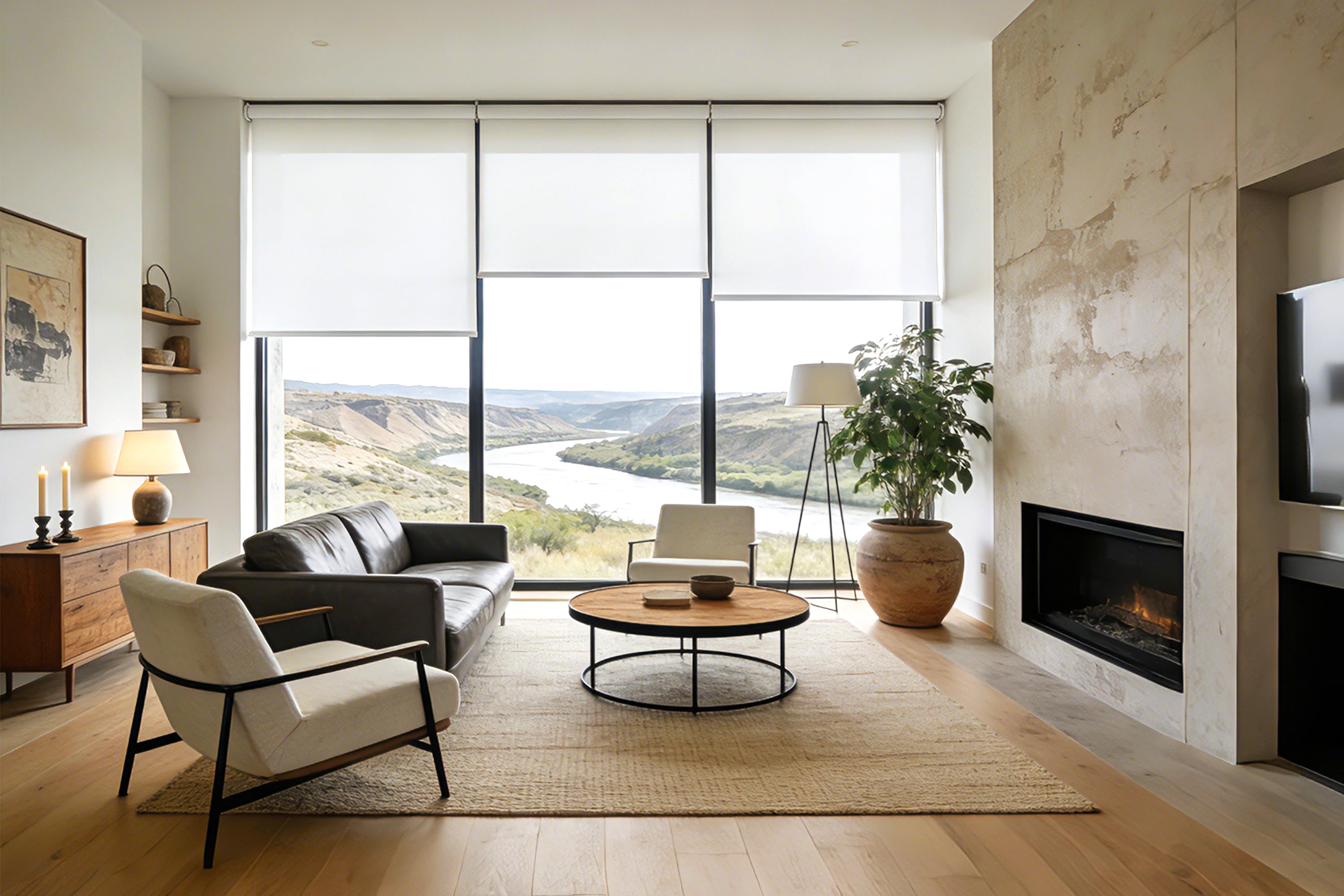
Building a new home is a journey of a thousand decisions. Between floor plans, finishes, and inspections, window coverings are often left until the very end. As a result, many homeowners realize they didn’t plan for hardwiring or hesitate to make changes for fear of putting new holes in brand-new walls and window frames.
Fortunately, there’s a smarter, more flexible approach. By focusing on cordless and no drill window shades, new homeowners can meet every functional need while protecting their investment and reducing stress.
When Is the Best Time to Install Window Treatments in a New Home?
When to install window treatments in new home
The best time to install is Moving Day, but the planning must start much earlier. To avoid "window nakedness" on your first night, aim to measure after the drywall is finished and order 3-4 weeks before move-in.
The Perfect Timeline for Window Treatments
Many brands, such as Hunter Douglas, recommend planning window treatments as early as the framing stage. While that may still apply to fully built-in systems, drill-free window shades give new homeowners far more flexibility.
Stage 1: After Trim & Drywall Are Complete
This is the ideal moment to measure. For no drill systems, accuracy is everything. Always wait until window trim and drywall are fully finished before taking measurements. Measuring too early can lead to gaps, poor fit, or light leaks.
Stage 2: 3—4 Weeks Before Move-In
Place your order. This window allows enough time for production and shipping of custom window treatments, without rushing or paying for expedited fees.
Stage 3: Moving Day
Install your window shades. With no drill, cordless designs, there’s no need to wait for installers. Most systems can be installed in minutes with simple tools or none at all. You’ll have privacy and light control the very first night in your new home.

Prioritizing Functionality Before Style
Before choosing fabrics or colors, ask yourself three essential questions. The answers will determine the right window treatment for your home.
1. Light Control & Natural Light
Do you need full blackout or softly filtered daylight?
- Bedrooms typically benefit from blackout window shades.
- Living rooms and shared living space often call for light filtering window blinds that preserve natural light.
2. Energy Efficiency
Even in a newly built home with modern insulation, windows remain a major source of heat loss and heat gain. Cellular shades are the gold standard for energy efficiency, trapping air to help regulate indoor temperature.
3. Safety & Aesthetics
For most new families, child safety is a top priority. Cordless window shades eliminate dangling cords that can pose risks to children and pets, while also delivering a clean, streamlined look that complements modern interiors and open-concept living spaces.
Room-by-Room Planning Guide
Just bought a new house and need help choosing the right window shades for different rooms? Instead of choosing window coverings by room name alone, the smartest approach is to match each space with how it’s used. For example, how much light you want, when you want privacy, and how often the shades will be adjusted. Here’s how to plan with real-life needs in mind.
Living Room & Living Space
Primary needs:
- Bright, comfortable natural light during the day
- Glare reduction without blocking the view
- UV protection for furniture and flooring
Recommended window shades:
For living rooms, full blackout is rarely necessary. Light filtering shades soften harsh sunlight while preserving outside views, making them ideal for large windows and open living spaces. Cellular shades offer similar brightness with added insulation, helping maintain indoor comfort year-round. You can also choose day-and-night or top-down bottom-up cellular shades for a balance between soft sunlight and privacy.

Dining Room
Primary needs:
- Flexible light control for different times of day
- Comfortable brightness without direct glare
- Privacy during evening meals
Recommended window shades:
- Light filtering or room darkening roller shades
- Cellular/honeycomb shades with adjustable opacity
- Light filtering Roman shades
Dining rooms often share windows with living spaces, so using the same shade type creates visual continuity. Roller shades allow easy adjustment between daylight meals and evening privacy, while cellular shades provide better temperature control in rooms with exterior walls. For farmhouse or traditional style homeowner, Roman shades is a perfect option to create a warm and natural feel for your new kitchen.

Bedrooms
Primary needs:
- Strong privacy at all hours
- Full blackout or near-total darkness for better sleep
- Thermal insulation for comfort
Recommended window shades:
- Blackout cellular/honeycomb shades
- Blackout roller shades
Bedrooms benefit most from blackout or room darkening options. Cellular shades are especially effective, as their honeycomb structure improves energy efficiency while blocking outside light. Roller shades work well for a cleaner, more minimal look when paired with blackout fabrics.

Home Office / Multi-Use Rooms
Primary needs:
- Glare control for screens
- Balanced daylight for productivity
Recommended window shades:
- Light filtering roller shades
- Light filtering cellular/honeycomb shades
- Top-down bottom-up cellular/honeycomb shades
- Day-and-night cellular/honeycomb shades

These rooms often shift between daytime and evening use. Light filtering window shades reduce glare without darkening the room too much, while top-down bottom-up or day-and-night cellular shades offer maximum flexibility—bright during work hours, darker for naps or rest.
Kitchens
Primary needs:
- Easy-to-clean materials
- Resistance to heat, steam, and splashes
- Daytime privacy without sacrificing brightness
Recommended window shades:
- Light filtering roller shades
- Zebra blinds
Kitchens benefit from window shades that handle frequent use and changing conditions. Light filtering roller shades are especially practical, allowing in plenty of natural light while diffusing glare near sinks and countertops. The alternating sheer and solid fabric bands of zebra blinds make it easy to switch between filtered daylight and added privacy without fully raising the shade.

Bathrooms
Primary needs:
- High privacy at all times
- Strong moisture and humidity resistance
- Materials that won’t warp, trap moisture, or develop mildew
Recommended window shades:
- Blackout roller shades
- Faux wood blinds
Bathrooms don’t require soft light diffusion or decorative fabrics. What matters most is reliable privacy and durability in a high-humidity environment. Waterproof blackout roller shades deliver full privacy and moisture resistance in a simple, low-profile design. For homeowners who prefer adjustable light blocking and ventilation, faux wood blinds offer precise control while standing up to steam and frequent temperature changes.
Hestia Blinds offers no drill window shades that fit every room for your new home, including waterproof no drill roller shades for bathroom, no drill zebra blinds for kitchens, no drill cellular shades for living room or home office, and no drill PVC blinds for any room. Explore our no drill blinds and customize your size, color, fabric style for your new home now!

Why Drill-Free Is Best for New Builds
This is where modern window treatments truly shine.
Protect Your Home’s Value
Drilling into new window frames can compromise waterproofing layers and damage pristine finishes. No-drill systems preserve both function and appearance.
Low Commitment, High Flexibility
Tastes change. With drill-free window shades, you can update your look later without worrying about holes, patches, or mess.
Easy Installation
No professional installer required. Even first-time homeowners can install most no drill blinds quickly—saving both time and money.
Conclusion
Planning window treatments for a new home doesn’t have to be overwhelming. Considering no drill shades will reduce much of the stress. By following a simple measure → prioritize function → choose the right product approach, you can create a comfortable, stylish, and energy-efficient home without unnecessary complications.
Frequently Asked Questions
What to know before buying window blinds for the first time?
Focus on three things: accurate measurements (after the window trim is installed), the primary function of the room (privacy vs. light), and the mounting type (inside mount for a clean look, or outside mount to cover the trim).
What are the best high window blinds ideas for floor-to-ceiling glass?
For very high or floor-to-ceiling windows, automated or motorized shades are highly recommended. Automation is ideal for large glass areas because it allows you to synchronize multiple shades, ensuring they raise and lower at the exact same speed for a cohesive look. If you prefer a non-electronic version, cordless cellular shades offer a lightweight solution that is easy to operate even at larger sizes.
What size window shades for floor-to-ceiling windows are best?
It is often best to split a single wide span into two or three separate shades. While custom rollers can be made quite large, splitting them prevents the mechanism from becoming too heavy to operate and allows for more flexible light control throughout the day.
What should I consider when planning automated shading for large windows and glass walls?
When planning automated shading for large windows and glass walls, the most important factor is the power source. For new builds, you can choose between hardwired systems (planned during the electrical phase) or high-capacity battery motors.
Is it hard to measure for window treatments for new homes?
Not if you wait until the home is "finished." Always measure the width at the top, middle, and bottom of the window frame, and use the smallest measurement for an inside-mount shade to ensure a perfect fit.
Share:
2026 The Growing Trend of Eco-Friendly Features in Home Décor
Venetian Blinds Styles for Modern Homes in 2026