


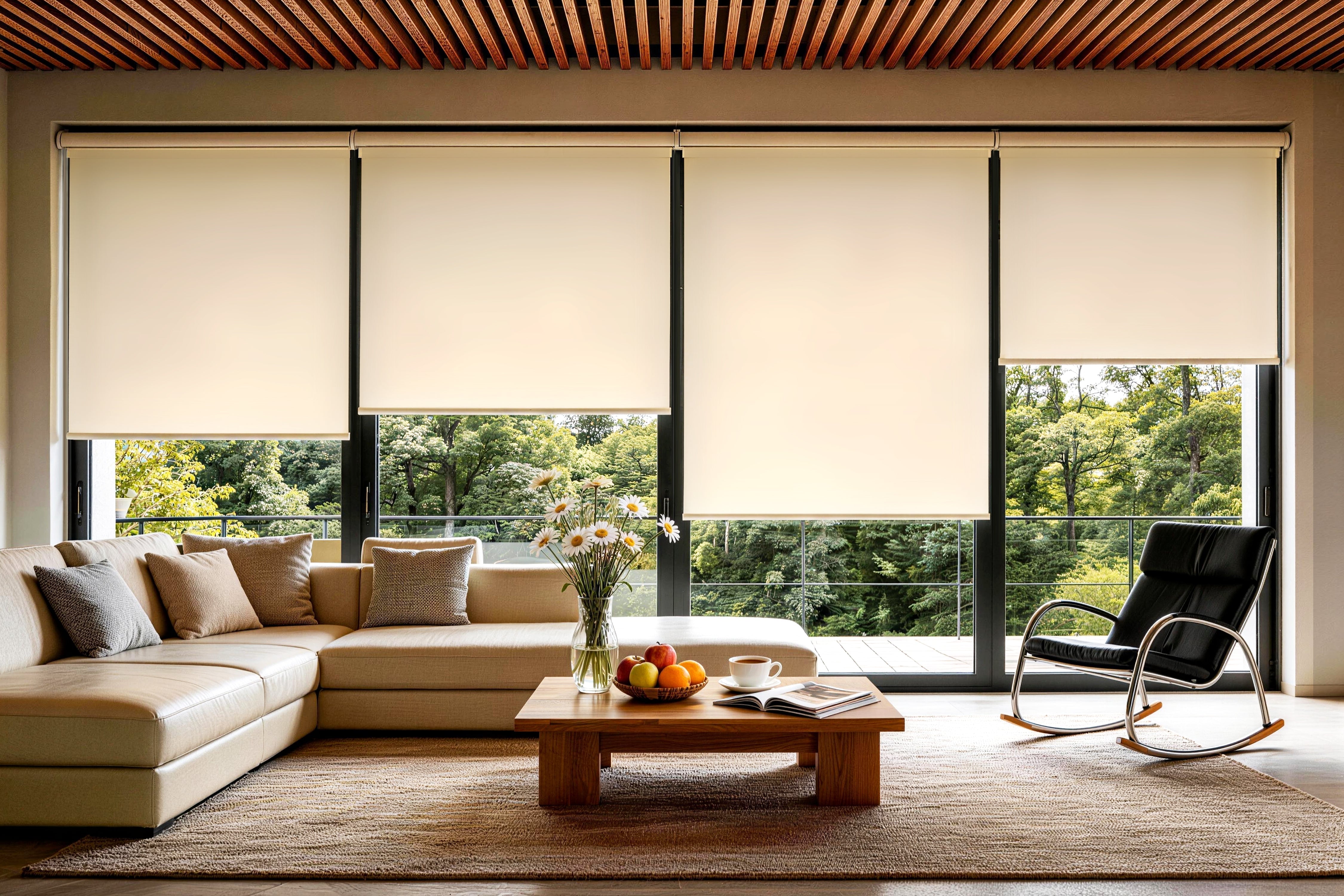
Many homeowners hesitate to buy window shades for large windows due to fears of sagging fabrics, astronomical shipping costs, or complex installations. Your large windows should be a stunning visual centerpiece, not a source of stress.
The most effective solution is a split-design approach. By choosing multiple blinds for extra wide windows, you ensure effortless operation, prevent mechanical failure, and perfectly capture that high-end aesthetic without the "oversized" headache.
1. Avoid No Drill Window Shades for Extra Wide Windows
No drill shades are popular for their easy installation, but they are not the best choice for window shades for wide windows. Most no drill systems rely on a spring-loaded tension mechanism that presses outward against the window frame to stay in place.
Currently, our maximum supported width for no drill window shades is 79 inches. Across the market, most no drill systems rarely exceed 80 inches in width for safety and stability reasons. For extra wide window shades, we strongly recommend choosing drill-mounted installation for better structural support and long-term performance.

2. Consider Buying Two Shades Instead of One Oversized Shade
Why Not Order One Extra-Large Shade?
Technically, factories can manufacture very large roller shades even over 98 inches wide. However, that doesn’t always mean it’s the best solution.
Here’s why:
① Durability Concerns
Large shades are significantly heavier. For windows or doors that are opened and closed frequently, this extra weight can:
- Increase strain on internal lifting mechanisms
- Accelerate wear on cords or control systems
- Shorten the overall lifespan of the shade
Heavy shades are simply under more stress every time they operate.
② Extremely High Shipping Costs
Large-format blinds for extra wide windows often trigger oversized freight surcharges. Carriers may charge a fixed oversized shipping fee (often around $400 for widths over 89 inches) because they require specialized handling.
That means:
- Custom production costs increase
- Shipping costs increase dramatically
- The overall value becomes less attractive
③ Higher Risk of Shipping Damage
Extra-wide packages are harder to handle and more vulnerable during transit.
Common issues include:
- Bent headrails
- Warped aluminum profiles
- Edge damage from impact
Even with protective packaging, longer and heavier items carry greater shipping risks.

The Benefits of Splitting into Two Shades
Choosing two separate window shades for large windows instead of one oversized unit isn’t just a workaround. In most cases, it’s the smarter long-term solution.
Smaller shades are typically less expensive to manufacture and ship, helping you avoid oversized freight surcharges and special handling fees. They are also lighter, which means smoother daily operation and less strain on internal mechanisms, ultimately extending their lifespan. In addition, shorter packages are far less likely to be damaged during transit.
Beyond durability and cost, splitting your window gives you greater flexibility in light control. Instead of adjusting one large shade for the entire window, you can operate each section independently. This added control makes two shades not just a safer choice, but a smarter one for everyday living.

3. For Wide Windows, Motorized Shades Should Also Be Split
Motorized shades are a popular upgrade for large windows but weight still matters.
If a single shade is too wide:
- The motor may struggle to lift the fabric
- Long-term wear on the motor increases
- Performance may become inconsistent over time
Even if the motor can technically handle the weight, continuous heavy load leads to faster mechanical fatigue. Dividing the span into two or more motorized custom blinds for large windows ensures smooth, quiet operation and protects your motor's internal components from premature failure.

Final Recommendation
When dealing with extra wide windows, bigger is not always better.
While it may seem simpler to order one large shade, splitting your window into two or more sections often results in:
- Better structural safety
- Lower total cost
- Easier operation
- Longer product lifespan
- More flexible light control
If you're unsure how to divide your window width properly, refer to our measuring guide on window shades for wide windows.
Frequently Asked Questions
1.What are large windows shades?
Large window shades are typically those that exceed 72 inches in width or 84 inches in height. As a rule of thumb, any shade that covers an area greater than 30 square feet (about 2.8 m²) is also considered large. Shades of this size often require stronger mounting hardware (like screw-mounted brackets) and may need custom orders or wider fabric rolls. In many cases, the best solution is to install two or three shades side by side instead of using one big shade.
2.How do I choose the right window coverings for a big picture window?
The best approach for a big picture window is to install two or three motorized shades side-by-side. This setup allows you to control them all at once, acting just as efficiently as a single window shade.
3.What factors should I consider when choosing the size of roller shades?
Before ordering roller shades for wide windows, you’ll need to measure the mounting depth to make sure the shade fits inside the window frame. You should also consider the weight of the shade when choosing between no-drill and drill-mounted installation. Typically, if the total area of your blinds (width × height) exceeds 3,100 square inches, we recommend going with screw-mounted hardware.
4.What is the maximum width for custom shades ? Are there size limitations?
Usually, the practical limit is between 98 and 115 inches. Exceeding these extra wide window shades limits often leads to fabric curling at the edges because the tension cannot be distributed evenly across the span.
5.How many window coverings are necessary to span 50 windows covering 15 windows long?
The number depends on the total width of the area you're covering. As a general rule of thumb, it's a good idea to use one shade for every 3 to 5 feet — this keeps each shade lightweight and easy to handle while looking clean and modern.
But if you specifically want each shade to cover 15 windows in a row, you’ll need about 4 shades for 50 windows (since 50 ÷ 15 ≈ 3.3, and you can’t use a fraction of a shade).
Share:
How to Choose Non-Toxic and Safe Window Treatments
How to Measure Wide Windows When Buying Two Shades Instead of One