


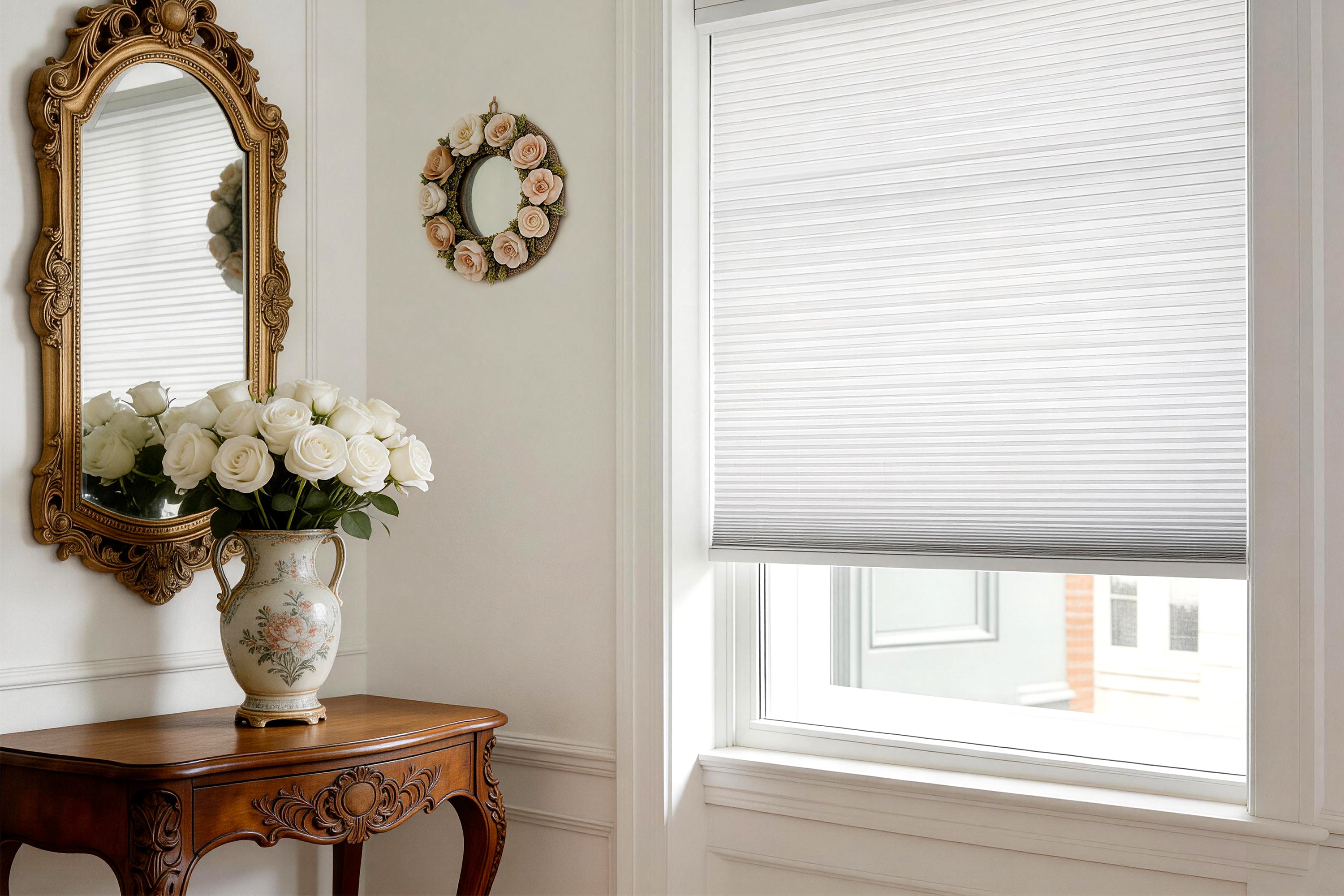
Most people pick cellular shades based on color or texture, but the secret to their comfort, durability, and performance is actually the fabric. It’s the material that controls light, locks in heat, resists moisture, and keeps your shades looking great for years.
In this guide, we’ll break down the fabrics behind cellular shades, show how they impact functionality, and explain the finishing technologies that take a shade from good to exceptional. By the end, you’ll see why choosing the right fabric is the key to picking shades that truly work for your space.

Core Fabric Materials: What Are Cellular Shades Made Of?
Non-Woven Fabrics: The Foundation of Cellular Shade Materials
Non-woven fabrics are the backbone of most cellular shades, and it’s easy to see why. Instead of weaving fibers together, they are bonded through heat, chemicals, or pressure, creating a lightweight, breathable structure that holds its shape beautifully. This makes it simple to form the honeycomb cells that give these shades their signature insulation and soft sound-dampening qualities.
Depending on how the fibers are treated, non-woven fabrics can differ in strength, texture, and functionality, from the everyday standard type to premium spunlace, and even specialized coated versions for extra performance. Let’s take a closer look at each type and what it brings to your window.
1. Standard Non-woven: Pros, Cons & Best Uses
For many cellular shades, standard non-woven fabric remains the go-to choice, and its popularity isn’t surprising. Unlike woven materials, this fabric is created by bonding fibers together, forming a lightweight yet stable sheet that naturally holds its shape. This makes it simple to craft the iconic honeycomb cells, which trap air for insulation and help reduce noise.
Its straightforward manufacturing process keeps costs down, while the lightweight structure makes shades easy to lift and operate without straining your window hardware. In short, it’s practical, user-friendly, and versatile for spaces you use every day.
Like any material, it has its limitations. Over time, fibers may relax slightly, the texture is simple, and the visual depth is modest compared with premium fabrics. Still, for living rooms, offices, or casual bedrooms, these minor trade-offs are easily outweighed by reliability, affordability, and ease of installation, qualities that have kept standard non-woven fabrics a popular choice for years.

2. Why Choose Spunlace Non-woven: Stronger & Softer Premium Option
Spunlace, or water-jet entangled non-woven fabric, takes cellular shades to the next level. Instead of relying on adhesives, this material uses high-pressure water jets to intertwine fibers, creating a fabric that is both stronger and more resilient than standard non-woven. The tight fiber entanglement also gives the surface a smoother, more uniform appearance, making it visually richer and softer to the touch.
These qualities make spunlace ideal for light-filtering shades in living rooms, offices, or any space where elegance meets everyday use. You still get the easy-to-shape honeycomb structure, but with better durability and a more polished look that stands up to repeated use without sagging or losing its form.
3. Functional Coated Non-woven Fabrics: Boosting Performance for Cellular Shades
As homeowners seek more from their window treatments, better light control, moisture resistance, or UV protection, cellular shade fabrics have evolved to meet these needs. One common solution across the industry is to add functional coatings during post-processing, rather than reinventing the base material. By applying a thin layer of specialized coating, manufacturers can upgrade standard non-woven fabrics with water repellency, blackout capability, stain resistance, or UV blocking, all while keeping the honeycomb structure intact.
This approach has become a standard in the market because it allows shades to perform in demanding environments, bathrooms, kitchens, or sun-drenched living areas, where ordinary non-woven fabrics might fade, sag, or lose their insulating properties. In other words, functional coatings are the practical upgrade that keeps shades relevant in modern homes.
However, coatings are not a perfect fix. Over time, the layer can wear down or peel, especially in high-humidity conditions, and some treatments may slightly reduce breathability or the soft feel of the fabric. That’s why thoughtful engineering matters. Premium solutions, like Hestia’s waterproof cellular shades, take these challenges into account, combining durable non-woven fibers with coatings that hold up better in moisture-prone spaces. This ensures the shades remain effective, visually appealing, and long-lasting, even in demanding environments.

Woven Fabrics for Cellular Shades: Style and Durability Combined
While non-woven fabrics dominate the market, woven fabrics bring a different set of strengths to cellular shades. By interlacing warp and weft fibers through traditional weaving, the fabric gains a tight, uniform structure that naturally resists sagging or stretching over time. This makes woven shades look crisp and maintain their shape even after repeated raising and lowering.
The weaving process also creates a richer texture and more refined surface, giving your shades a high-end appearance that feels substantial and visually layered. The structure’s stability allows woven fabrics to drape elegantly, complementing other premium window treatments, while also providing a reliable foundation for advanced coatings like blackout or thermal finishes.
In short, woven fabrics combine style with long-term performance. Unlike standard non-woven options, which rely on bonded fibers that can relax or flatten, woven fabrics’ interlaced construction ensures dimensional stability, better surface consistency, and a tactile, high-quality feel. For spaces where both aesthetic appeal and functional durability matter, such as living rooms, master bedrooms, or formal offices, woven shades offer a premium choice that lasts and impresses.

Top Features of Cellular Shades: Performance That Matters
Picking the right fabric is just the start, what truly defines a cellular shade is how it enhances life inside your home. From softly filtering harsh sunlight in a sunlit living room to keeping a bedroom cool during hot summer afternoons, or standing up to steamy kitchens and bathrooms, these shades are more than decorative. Their fabric, honeycomb structure, and finishing touches work together to manage light, trap or block heat, resist moisture, and maintain their shape for years. Let’s explore the key features that make cellular shades both practical and stylish.
1. Light Control & Privacy: Why Cellular Shades Offer Ultimate Flexibility
One of the main reasons homeowners love cellular shades is their ability to tame sunlight and create a comfortable atmosphere. How much light a shade lets in depends on both the fabric itself and the honeycomb structure inside. Thicker, denser fabrics or multi-layered honeycomb designs can significantly reduce sunlight, while lighter materials allow a soft, sun-diffused glow to fill the room without glare.
Cellular shades generally fall into three light-control categories: light filtering, which gently softens sunlight while keeping the room bright; room darkening, which blocks most light for cozy, dim environments; and full blackout, which offers near-total darkness, perfect for bedrooms or media rooms. Understanding these options helps you pick the right balance between brightness and coziness.
Beyond just controlling light, these choices naturally affect privacy and mood. A denser, room-darkening or blackout shade not only reduces glare but also shields your interior from prying eyes, while lighter, light-filtering fabrics maintain openness and a soft, airy feel. So when you’re shopping, think about the sunlight you want, the privacy you need, and the atmosphere you’re aiming for, your choice shapes both the function and the vibe of your space.

2. Thermal Insulation & Energy Efficiency for Year-Round Comfort
Cellular shades do more than filter light, they help keep your rooms comfortable. The secret lies in the honeycomb structure itself. Each shade is made up of a series of hollow cells that trap air like tiny pockets, creating an insulating layer, think of it like a thermos keeping your drinks at the right temperature. This trapped air slows the transfer of heat, helping rooms stay cooler in summer and warmer in winter, while also reducing energy costs.
Not all honeycomb designs are created equal. Cellular shades come in single-cell, double-cell, and cell-in-cell structures, each offering different levels of insulation:
- Single-cell shades consist of one layer of honeycomb-shaped pockets. They provide basic insulation, perfect for moderate climates or smaller windows where a simple air barrier is enough to help regulate temperature.
- Double-cell shades stack two layers of honeycomb cells, creating more pockets of trapped air. This dual-layer design boosts insulation, keeping interiors cooler in summer and warmer in winter, while enhancing overall energy efficiency.
- Cell-in-cell shades take it a step further, nesting smaller cells inside larger ones. This multi-layered approach maximizes trapped air, offering superior insulation and more precise temperature control for rooms exposed to intense sunlight or larger windows.
Besides the structure, fabric thickness, weight, and material also influence performance. Heavier or tightly woven fabrics, and those with reflective coatings, can enhance heat resistance, bouncing sunlight away and helping maintain a comfortable indoor climate. Choosing the right combination of honeycomb design and fabric ensures your shades not only look great but also keep your home cool when it matters most.

3. Moisture Resistance & Hygiene: Ideal for Humid Environments
Bathrooms, kitchens, or any space with high humidity can be tough on traditional cellular shades. Moisture can weaken fabrics over time and even lead to mold growth, shortening the lifespan of your shades. For homeowners dealing with steamy showers or cooking areas, this is a real concern.
To tackle this, many shades now use water-resistant or waterproof fabrics. These materials help repel liquid and reduce moisture absorption, keeping your shades looking fresh and performing well in damp conditions. However, it’s important to understand that waterproof does not automatically mean mold-proof. For long-term hygiene, some shades, like Hestia’s waterproof cellular shades, can be upgraded with anti-mold or antimicrobial treatments, providing an extra layer of protection against bacteria and mildew.
Choosing the right option depends on your space and needs. If you want shades that handle occasional splashes, a standard waterproof version may suffice. But for constantly humid environments or households concerned with hygiene, an upgraded anti-mold or antimicrobial treatment can be a smart investment. For practical tips on how to prevent mold even with waterproof blinds, check our guide on keeping your blinds clean and mold-free in humid spaces.

4. UV Resistance & Durability: Extending the Life of Your Cellular Shades
Just as sunlight can brighten a room, it can also take a toll on your cellular shades. Prolonged exposure to UV rays can weaken fibers, fade colors, and reduce the overall lifespan of your shades. This is where material choice, bonding methods, and finishing techniques play a crucial role.
Polyester fabrics naturally offer strong UV resistance thanks to their fiber strength, helping shades maintain color and structure over time. On top of that, specialized coatings can reflect harmful rays and protect against fading, while careful bonding, whether adhesive or thermal, ensures the honeycomb cells hold their shape even after countless cycles of raising and lowering.
The result is a shade that doesn’t just look good initially, but continues to perform reliably year after year. By combining robust fibers, precise bonding, and protective finishes, your shades can withstand daily use, repeated folds, and bright sunlight without sagging, warping, or losing their crisp honeycomb form.
With UV protection and durability in place, your shades stay vibrant, functional, and structurally sound, letting you enjoy the comfort, style, and performance you chose in the first place.

5. Easy Care & Maintenance: Keeping Your Cellular Shades Looking New
Part of what makes cellular shades so appealing is how effortless they are to maintain. High-quality fabrics are designed to resist abrasion, meaning daily handling won’t wear down the honeycomb structure. Many also feature anti-static properties, which reduce dust buildup and keep your shades looking fresh for longer. Combine that with simple cleaning methods, and you spend less time worrying about upkeep and more time enjoying the comfort and style of your shades.
In short, the performance of a cellular shade isn’t just about the base fabric. It’s the combination of material, structure, and finishing techniques that delivers durability, ease of care, and long-lasting beauty. With this foundation in place, it’s clear how fabric technology and craft make all the difference, which brings us to the next section: the finishing processes that elevate cellular shades from functional to exceptional.

Why Fabric Technology Makes the Difference
While high-quality fabrics lay the foundation, it’s the finishing technologies that truly unlock a cellular shade’s potential. Think of it as giving your shades a “performance upgrade”: coatings, bonding methods, and surface treatments can enhance durability, preserve vibrant colors, resist moisture, and boost insulation, letting your shades thrive in real-life conditions.
By understanding these processes, you’ll see how thoughtful craftsmanship and smart engineering turn a simple honeycomb fabric into a shade that not only looks great but also performs reliably day after day. It’s this attention to detail that sets brands like Hestia apart, creating shades you can trust for comfort, longevity, and style.
1. Dyeing vs. Printing: Ensuring Color Stability in Cellular Shades
One of the key ways cellular shades maintain their beauty over time is through color fastness, the ability of the fabric to resist fading, even after prolonged exposure to sunlight. How well a shade holds its color is closely tied to the way the pigments are applied to the fabric, which brings us to two common techniques: dyeing and printing.
- Dyeing is a process where the color penetrates deep into the fibers themselves. The fabric is immersed in a dye bath, allowing the pigment to bond uniformly with the material. The result is vibrant, consistent colors that resist fading, even under bright sunlight, and the fibers themselves remain richly colored without any white spots showing through. This method not only ensures long-term color stability but also gives the fabric a smooth, even finish that enhances the overall look of your shades.
- Printing, by contrast, applies color only to the fabric’s surface. While it allows for detailed patterns and creative designs, the pigment sits atop the fibers rather than integrating with them. Over time, this can lead to uneven fading, especially in areas exposed to direct sunlight, and the underlying material may become visible as the print wears.
For shades that truly keep their color season after season, dyeing clearly has the edge. Hestia’s cellular shades embrace this method, ensuring your windows stay bright, vibrant, and fresh-looking for years, no surprises, just consistent beauty that stands up to daily life and sunlight.

2. Coating Technologies for Cellular Shades: Enhancing Light, Heat, Water, and UV Protection
Beyond the base fabric, specialized coatings take cellular shades to the next level. These finishing technologies aren’t just about looks, they directly influence how your shades perform in everyday life. From blocking unwanted sunlight and reducing heat gain to repelling water and shielding against UV rays, coatings let your shades stay functional, comfortable, and long-lasting.
By understanding how these coatings work, you can see why some shades excel in sun-soaked living rooms, humid bathrooms, or energy-conscious homes, and how thoughtful craftsmanship makes a real difference in everyday use.

Blackout Coatings for Maximum Light Blocking
Earlier, we saw that controlling sunlight is one of a cellular shade’s superpowers, and coatings are the secret ingredient that makes it even stronger. By applying a thin layer, often aluminum or reflective film, directly onto the fabric surface, shades can block more light while keeping the clean, structured look of the honeycomb cells intact.
For standard cellular shades, this layer is minimal or absent, giving a gentle, sun-diffused glow, perfect for spaces where soft light keeps the room bright and inviting. But when you need serious darkness, such as in bedrooms or media rooms, advanced coatings come into play. Shades designed for room darkening or full blackout have a higher proportion of reflective coating, allowing near-total darkness while still maintaining a sleek, polished appearance.
In short, the right coating turns ordinary light-filtering shades into true privacy and comfort champions. It’s why two shades with the same honeycomb design can feel completely different, i.e., one softly glowing, the other perfectly dark, and why craftsmanship in coating really matters for everyday performance.
Thermal Coatings for Energy Efficiency in Cellular Shades
After exploring how coatings control light, let’s shift to another daily challenge: managing heat and energy costs. Remember, the honeycomb structure itself naturally traps air to provide a basic layer of insulation, but clever coatings can take this performance to the next level.
Standard cellular shades are fine for everyday spaces, offering some help in moderating indoor temperature. However, for homes in hot climates or for those seeking maximum energy efficiency, enhanced thermal coatings make a noticeable difference. These coatings work in two main ways.
First, the fabric itself can be engineered for better heat reflection. For instance, Hestia uses eco-friendly fibers like recycled polyester that are naturally more reflective, reducing the amount of heat absorbed into the room. Second, production techniques, such as applying a higher proportion of reflective aluminum layers during finishing, further boost the shade’s ability to block solar heat, effectively lowering indoor temperatures without relying solely on air conditioning.
The result? Rooms stay cooler in the summer, HVAC usage decreases, and your energy bills, and environmental footprint, can be reduced. By combining smart material choices with precise finishing processes, Hestia’s shades turn a simple window covering into a practical, eco-conscious solution that performs day after day.
Water-Repellent & Waterproof Coatings: Boosting Moisture Resistance
Moisture is the nemesis of traditional cellular shades, and in spaces with high humidity or occasional splashes, it can quickly compromise fabric and structure. To meet this challenge, Hestia has developed specialized waterproof and water-repellent coatings that protect your shades without affecting their texture or flexibility.
Here’s how it works:
(1) Waterproof coatings: During finishing, fabrics are treated with water-repellent agents and topped with a thin, durable barrier. Using the lotus effect, water beads up and rolls away instead of soaking in. On top of that, the fabric is tightly woven with ultra-high thread density, creating pores smaller than water droplets. This combination meets rigorous AATCC 35 standards, making the shade genuinely waterproof.
(2) Water-repellent (hydrophobic) coatings: For lighter protection, nanostructured or plasma-treated surfaces, or finishing with hydrophobic agents, make water slide off easily. While these don’t resist high water pressure as fully as waterproof treatments, they’re perfect for spaces where moisture exposure is occasional rather than constant.
Thanks to these coatings, Hestia’s waterproof cellular shades stay resilient in any high-humidity setting, from sunrooms and laundry areas to greenhouses or indoor plant corners. The fabric keeps its shape, resists mold and water damage, and lets you enjoy functional, stylish window coverings without worry.

UV Protection Coatings & Fiber Modification
Sunlight can be beautiful, but prolonged exposure to UV rays can gradually degrade fabric fibers, fade colors, and reduce the lifespan of your cellular shades. To address this, modern shades often incorporate UV protection at the material level, using a combination of methods designed to keep your shades looking vibrant for years.
There are three common approaches to enhancing UV resistance in cellular shades:
(1) Fiber modification: During the spinning stage, UV-blocking additives can be integrated directly into the fibers. This creates inherent protection, making the fabric less susceptible to sun damage.
(2) Finishing treatments (post-processing coatings): After the fabric is woven, UV-blocking agents can be applied to the surface. These coatings form a thin barrier that reflects or absorbs UV radiation, protecting the fibers beneath without changing the texture or flexibility of the shade.
(3) Fabric structure optimization: Adjusting the weave density, color depth, or thickness of the fabric can also reduce UV penetration. Tighter weaves, darker or thicker fabrics naturally filter more sunlight, complementing any chemical or coating treatments.
Hestia cellular shades utilize the surface coating method during post-processing, creating a protective layer that reduces UV penetration while maintaining the softness, flexibility, and aesthetic of the fabric. This approach allows the shades to endure daily sunlight exposure without noticeable fading or fiber weakening over time.
By combining thoughtful material choice with targeted surface treatment, UV protection coatings help your shades retain their vibrancy and structural integrity, even in sun-filled rooms. It’s a subtle but essential enhancement, preserving both the look and performance of your shades while keeping your indoor environment comfortable.
3. Bonding & Structure Stability: Why It Matters for Long-Term Use
Even the best fabric can only perform as well as its construction allows. In cellular shades, the way the honeycomb cells are bonded plays a crucial role in durability, appearance, and smooth operation over time. Two main bonding methods are commonly used: adhesive bonding and thermal bonding.
- Adhesive bonding relies on specialized glues to hold the layers of non-woven fabric together. When done correctly, it provides reliable cell structure and consistent folds. However, lower-quality adhesives or uneven application can lead to peeling, sagging, or uneven honeycomb shapes over months of daily use.
- Thermal bonding, on the other hand, fuses layers of fabric using heat and pressure. This method creates a strong, seamless connection without relying on chemicals. The result is a honeycomb structure that resists warping, keeps its crisp folds, and glides smoothly when raising or lowering the shades.
The choice of bonding method directly affects long-term performance: from the durability of the cells, the sharpness of the pleats, to the effortless operation of the shade. In practice, thermal bonding often offers greater reliability for high-use spaces, while quality adhesive bonding can still perform well when executed with precision.
In short, the fabric itself is just the beginning, the bonding and overall structure determine whether your shades stay looking and functioning like new over time. Understanding these differences is key when you’re about to choose the right cellular shade material for your home.
How to Choose the Right Cellular Shade Fabric for Your Space
After exploring the ins and outs of cellular shade fabrics and the technologies that enhance their performance, you now know that a shade is more than just its color or texture. From light control to thermal insulation, moisture resistance, UV protection, and easy maintenance, every feature stems from the combination of fabric choice and craft. With all these factors in mind, the next step is choosing the shade that best fits your home and lifestyle.
Whether you’re refreshing a single room or outfitting an entire house, the right fabric can make a big difference in comfort, energy efficiency, and everyday convenience. Let’s look at practical ways to match fabric to your space or your top priorities, so you can make an informed decision rather than just picking what looks nice on the shelf.
1. Best Cellular Shade Fabrics by Room
Different rooms have different challenges, and the fabric you choose should respond to those needs.
- Living Rooms & Studies: These are spaces where style meets function. Standard or lightly coated non-woven fabrics work well here, they provide soft light filtering, maintain a clean honeycomb shape, and are easy to keep tidy. The goal is a comfortable, inviting atmosphere without over-engineering the functionality.
- Bedrooms & Media Rooms: Here, light control is critical. Heavier fabrics with blackout coatings or multi-layer honeycomb structures deliver room-darkening or full blackout effects, helping you sleep better or enjoy movie nights. Enhanced thermal coatings also contribute to a cozy environment while reducing energy use.
- Kitchens & Bathrooms: Humidity is a real concern. Fabrics with waterproof or water-repellent coatings prevent water damage, mold, and odors. Hestia’s waterproof cellular shades, for example, combine tightly woven fabric with advanced surface coatings, making them ideal for these spaces without sacrificing style.
- Sun-Facing Rooms: Rooms that receive intense sunlight benefit from fabrics with UV protection. Coated or tightly woven materials preserve color vibrancy and prevent fading, extending the life of your shades and keeping your interiors looking fresh.
In every case, your choice balances function and style, ensuring the shades you select meet the specific demands of each environment while enhancing the overall look of your home.

2. Choose the Right Fabric by Your Top Priority
Sometimes, the decision isn’t about a room but about what matters most to you: light control, moisture protection, energy savings, or ease of care. Understanding why each feature matters helps you make a confident choice.
- Maximum Privacy & Light Control: Opt for dense, multi-layered fabrics with blackout coatings. The combination of material and coating determines how much light is blocked and how well your shade maintains privacy, all while keeping the honeycomb structure intact.
- Moisture Resistance & Hygiene: For kitchens, bathrooms, or humid climates, waterproof or water-repellent fabrics prevent mold and extend the life of your shades. Hestia’s surface coatings and careful material selection make these shades highly reliable for long-term use.
- Energy Efficiency & Thermal Comfort: Shades with thermal coatings and multi-layer cells trap air and reflect heat, lowering energy consumption and keeping indoor temperatures more stable, perfect for summer months or sun-heavy rooms.
- Easy Maintenance & Longevity: Abrasion-resistant, anti-static, and easy-to-clean fabrics reduce the effort required to keep your shades looking new. The right bonding method ensures folds remain crisp and operation stays smooth for years.
By thinking about where the shades will go and what features matter most, you can select a fabric that meets both functional needs and aesthetic preferences. The ideal choice is rarely just one factor, it’s the combination of material, structure, and finishing technology that delivers the performance and convenience you want.
Conclusion
At the end of the day, the best cellular shade is the one that fits your space and lifestyle, not just your budget. The right fabric, honeycomb structure, and finishing touches make all the difference in light control, insulation, and durability.
With Hestia, thoughtful design and quality materials come together to create shades that are practical, long-lasting, and easy to enjoy every day. Now it’s your turn, pick the shades that make your home feel just right!
Share:
Hestia Cellular Shades Buying Guide: How to Choose and Order the Right Shade Online