


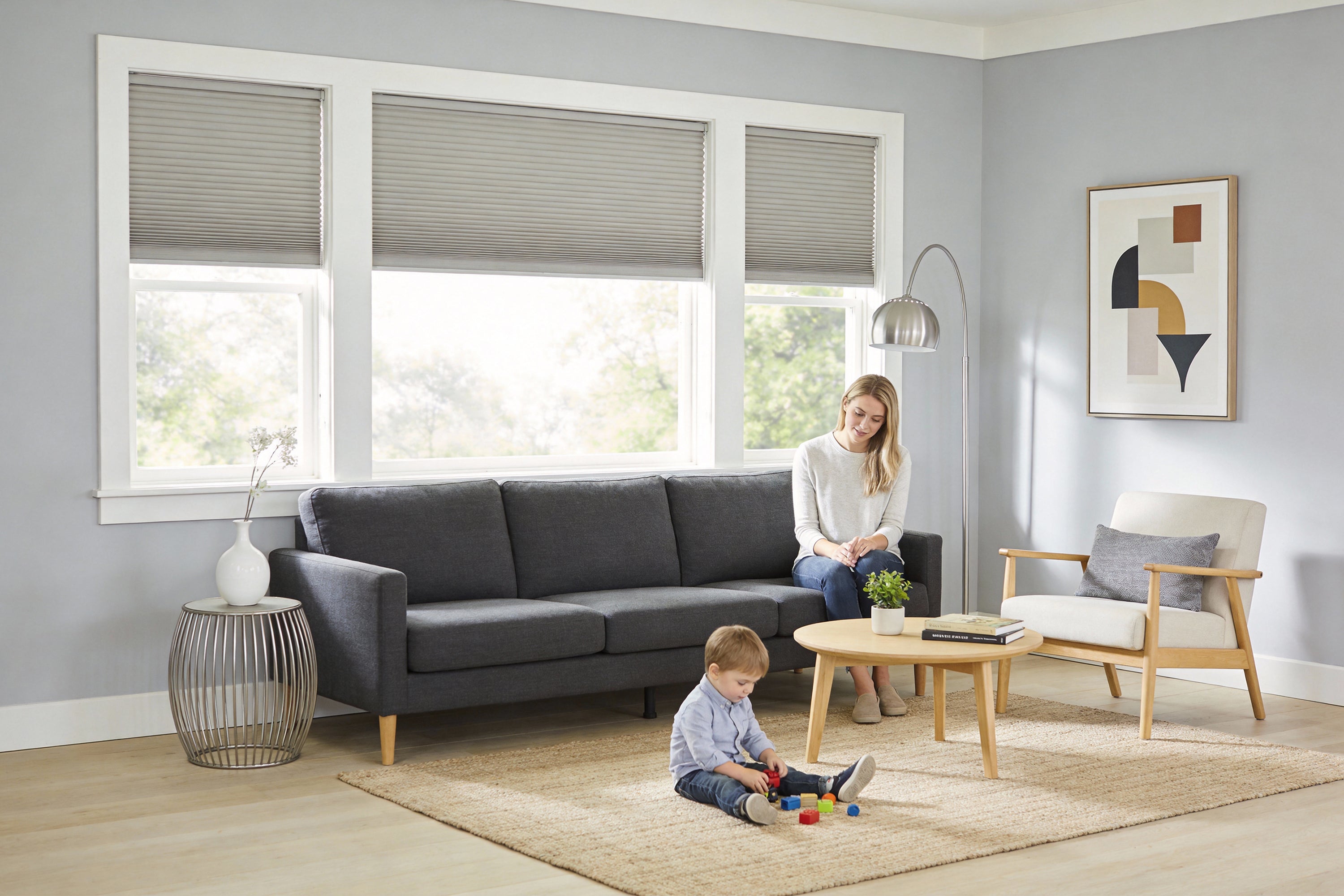
When people talk about creating a healthy home for children or during pregnancy, the focus usually falls on paint, furniture, or air purifiers. Window treatments, however, are rarely part of the conversation.
In reality, curtains and blinds are large, permanent interior products. They are installed close to where families sleep, rest, and spend long hours indoors. In North American homes, where insulation is tight and windows receive strong sunlight, choosing non toxic blinds is a vital step in ensuring a healthy indoor environment, as certain materials used in window coverings can slowly release chemicals into indoor air over time.
This article explains which materials may pose potential risks, how to identify safer alternatives, and what families with children or pregnant women should prioritize when choosing window treatments.
The Hidden Danger: VOCs and Chemical Off-Gassing
Many mass-produced window coverings are treated with chemicals that release Volatile Organic Compounds (VOCs). For pregnant women and newborns, whose respiratory systems are highly sensitive, these "new blind smells" are a major red flag.
What to Avoid:
- Low-Quality PVC: Some cheap plastic blinds contain phthalates and lead. When heated by the sun, they can release harmful vapors.
- Formaldehyde: Often used in fabric stiffeners or adhesives in low-end window shades.
- Chemical Flame Retardants: While they sound safe, many older flame retardants are linked to hormonal disruptions.
The Healthy Choice:
Look for materials that are PVC-free or certified for low chemical emissions. Our Anti-mold Roller Shades are engineered to be odorless and stable even under direct sunlight, ensuring your indoor air quality remains pristine.

Physical Safety: Why "Cordless" is Non-Negotiable
Beyond material composition, physical safety is another important consideration. Corded window coverings are a well-documented hazard for young children, and safety organizations in the United States strongly recommend cordless designs in homes with children.
Cordless roller shades, cellular shades, and zebra shades eliminate this risk while also offering a cleaner and more modern appearance. For many families, cordless operation becomes a non-negotiable feature once children are present.

Certifications That Help Identify Safer Window Treatments
Because material composition is not always obvious, third-party certifications play an important role in product evaluation. Searching for the best non toxic blinds often starts with checking for these specific labels:
- OEKO-TEX® Standard 100: Widely used for textile products and tests finished fabrics for harmful substances. It is particularly relevant for fabric-based window treatments such as roller shades, zebra shades, and cellular shades.
- GREENGUARD and GREENGUARD Gold: These focus on chemical emissions into indoor air and are commonly referenced in schools and healthcare environments in the United States.
- GOTS (Global Organic Textile Standard): Addresses both fiber content and processing methods. While not all window treatments fall under this category, it can be useful when organic materials are involved.
It is worth noting that general terms such as “eco-friendly” or “green” are marketing language unless supported by recognized certifications.
Best Window Treatments for Moms and Babies
Not all shades serve the same purpose. Here is our expert recommendation based on your specific needs:

Installation and Everyday Use Considerations
Installation methods can also affect the overall indoor environment. No-drill and damage-free installation options are especially useful for nurseries, rental properties, and newly renovated homes, as they reduce dust and surface damage.
After installation, allowing new window treatments to air out before regular use can help minimize initial odors. Routine cleaning with water or mild soap rather than chemical cleaners further supports a healthier indoor space.
Final Thoughts
Creating a healthier home environment is not about eliminating every potential risk, but about making informed choices. Window treatments are a permanent part of interior spaces, and selecting safer materials, certified fabrics, and cordless designs can significantly reduce unnecessary exposure over time.
Frequently Asked Questions
What are the child safety features for window coverings options?
The primary safety features include cordless mechanisms (motorized, spring-loaded, or wand-controlled), cord tensioners that keep loops taut against the wall, and break-away tassels designed to come apart under pressure. In the U.S., look for products with the "Best for Kids™" certification.
Are cellular shades safe for children?
Yes, cellular shades are considered very safe as long as they are cordless. Because they are lightweight and have no slats that can pinch fingers, they are often the preferred choice for nurseries.
What are the safest materials for window profiles in homes with children? (United States)
In the U.S., the safest window profiles (frames) are typically fiberglass, thermally broken aluminum, or FSC-certified wood. These materials are stable, do not off-gas significantly, and are highly durable. If using vinyl profiles, ensure they are labeled as "lead-free" and meet AAMA standards.
Are vinyl blinds toxic?
Vinyl (PVC) blinds can be problematic if they are low-quality. Cheap vinyl may contain lead as a stabilizer and phthalates for flexibility, both of which can off-gas when exposed to high heat from the sun. High-quality, modern vinyl blinds are often lead-free, but they still carry a higher chemical footprint than natural materials.
What are the safest window materials?
The safest materials for the windows themselves are glass (ideally tempered for safety) and frames made of natural wood, aluminum, or fiberglass. These materials are chemically inert and do not release VOCs into the home.
Are pvc blinds safe?
PVC blinds are safe for general use if they are certified lead-free and VOC-compliant. However, for homes with infants or individuals with chemical sensitivities, PVC is generally less recommended than "PVC-free" alternatives like polyester fabrics, aluminum, or faux wood made from safer polymers.
Which cordless shades are safest for homes with young children?
The safest options are cordless cellular shades and cordless roller shades. These designs have no accessible inner cords or outer lift cords, completely removing the risk of strangulation. Motorized shades are also an excellent, 100% cord-free solution for high or hard-to-reach windows.
Share:
What to Do If Your Window Shades or Blinds Get Moldy or Warped?
How to Choose Window Shades for Wide Windows