


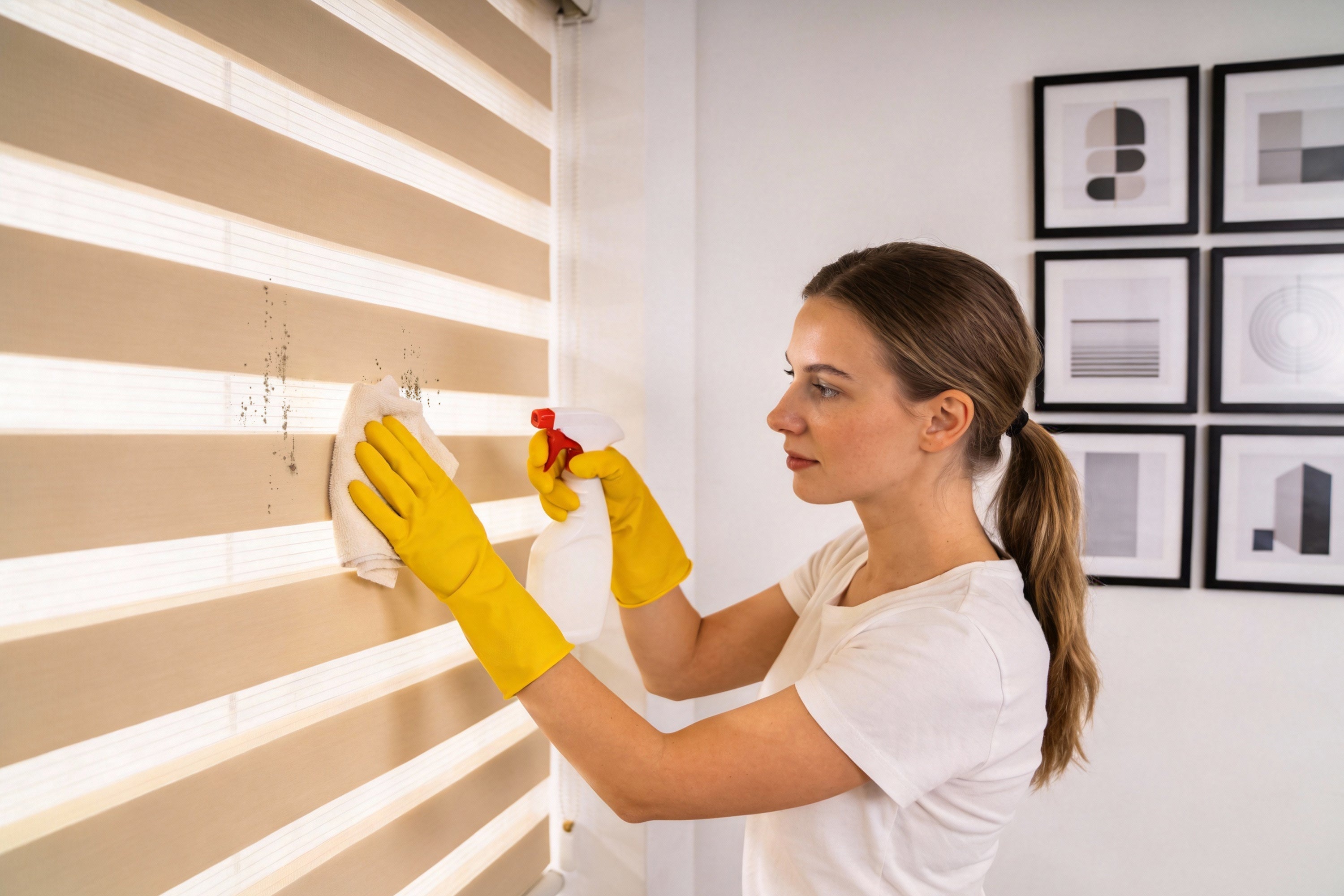
Moldy or warped window shades and blinds are a common issue in many North American homes, especially in bathrooms, kitchens, basements, or any space with higher humidity. While these "wet zones" are the usual suspects, you may also discover mold on blinds in bedroom windows if there is significant overnight condensation or poor air circulation.
The good news? Not all mold or warping means you need to replace your window treatments right away. In many cases, the problem can be cleaned, fixed, or prevented altogether with the right approach, and choosing the right materials makes a big difference.
In this guide, we’ll explain why mold and warping happen, how to clean different types of shades and blinds safely, and how to prevent these issues in the future.
Why Do Window Shades and Blinds Get Moldy or Warped in Humid Homes?
Understanding the cause is the first step to solving the problem.
1. High Humidity and Poor Ventilation
Bathrooms, kitchens, and basements are "wet zones." When we shower or cook, steam rises and settles on the nearest cold surface—usually the window and its shades. Without proper ventilation, this moisture lingers, leading to roller shades mold.
2. Material Matters More Than You Think
Different materials react very differently to moisture:
- Fabric shades absorb humidity more easily
- Real wood blinds can swell or warp over time
- PVC, vinyl, and faux wood are far more moisture-resistant
Choosing the wrong material for a humid room often leads to long-term problems.
3. Trapped Moisture Inside the Structure
Honeycomb shades mold is particularly tricky. The "cells" or "honeycombs" are designed to trap air for insulation, but they can also trap moisture. Once mold starts growing inside those cells, it is very difficult to reach.
How to Clean Mold from Different Types of Window Shades and Blinds
Tip: Before cleaning, always test any solution on a small, hidden area first.
Roller Shades & Zebra Shades

Many people struggle with how to get mold off fabric blinds without damaging the delicate weave. For light surface mold:
- Mix white vinegar and water (1:1 ratio)
- Gently wipe the affected area with a soft cloth or sponge
- Avoid soaking the fabric or letting water pool at the bottom
- Fully dry the shade before rolling it back up
If mold keeps returning, it may be a sign the material isn’t suitable for the room’s humidity level.
Honeycomb (Cellular) Shades

If you are wondering how to clean mold off honeycomb blinds, you must use extra care due to their hollow structure:
- Use a vacuum with a soft brush attachment for surface mold
- Avoid flushing water into the cells
- If mold is inside the cells, professional cleaning or replacement may be the safest option
This is why moisture-resistant materials are especially important in humid spaces.
Faux Wood & Aluminum Blinds

These are among the easiest window coverings to clean:
- Warm water + mild soap
- Wipe slats individually
- Rinse lightly and dry completely
Because they don’t absorb moisture, they’re much less likely to develop mold.
Roman Shades

- Spot clean only unless the fabric is clearly labeled as washable
- Avoid harsh cleaners
- Allow shades to air-dry fully before re-installing
What If Your Blinds Are Warped or Deformed?
Minor warping caused by uneven hanging or temporary humidity may improve once the environment dries out. However, severe warping is usually permanent, especially with wood or fabric-based products.
Consider replacing your blinds or shades if:
- Mold keeps coming back after cleaning
- Slats or fabrics no longer sit flat
- The lifting or rolling mechanism is affected
At this point, switching to a more moisture-resistant option often saves time and frustration in the long run.
Best Window Shades and Blinds for Bathrooms, Kitchens, and Humid Rooms
If you’re choosing new window treatments for moisture-prone areas, look for features such as:
- Waterproof or moisture-resistant materials
- Smooth, easy-to-clean surfaces
- Stable structures that won’t warp over time
For example, waterproof blackout roller shades are a practical choice for bathrooms or kitchens where light control and moisture resistance are both important. Similarly, PVC blinds offer excellent durability in humid spaces and are easy to wipe clean, making them a popular option for high-use areas. Hestia waterproof blinds also offer no-drill installation, which can make upgrades easier, especially in rental homes or recently renovated spaces.

How to Prevent Mold and Warping in the Future
Three things can help you prevent mold and warping.
Choose the Right Material for Each Room
For rooms with higher humidity, such as bathrooms, kitchens, or laundry areas, choosing PVC, vinyl, or waterproof-coated fabrics are far less likely to absorb moisture, which helps reduce the risk of mold growth and long-term deformation. In contrast, fabric shades and natural wood blinds are better suitable for drier spaces like bedrooms and living rooms.
Improve Airflow and Drying
Air circulation plays an important role. Even moisture-resistant blinds can develop issues if damp air becomes trapped. Using exhaust fans during showers or cooking, opening windows when possible, and avoiding rolling or stacking your shades until they’re fully dry can help moisture evaporate instead of settling into the material.
Regular Light Cleaning
Regular light cleaning is another simple but effective habit. Dust and grease can hold moisture against the surface of blinds and shades, creating an environment where mold can develop. A quick wipe-down or gentle dusting on a consistent basis helps prevent buildup before it becomes a problem.
Frequently Asked Questions
Below are some of the most common questions homeowners ask about moldy or warped window blinds and shades.
1. Is mold on window blinds dangerous?
Mold can affect indoor air quality and may trigger allergies. It’s best to clean it promptly or replace the product if the mold is severe.
2. Can I use bleach on window shades?
Bleach is generally not recommended, especially for fabric or layered shades. It can damage materials and cause discoloration.
3. How often should I clean blinds in humid rooms?
Light cleaning once a month and regular dusting usually helps prevent mold buildup.
4. Are honeycomb shades suitable for bathrooms?
They can work in well-ventilated bathrooms, but moisture-resistant materials are usually a safer long-term choice.
Share:
Venetian Blinds Styles for Modern Homes in 2026
How to Choose Non-Toxic and Safe Window Treatments