


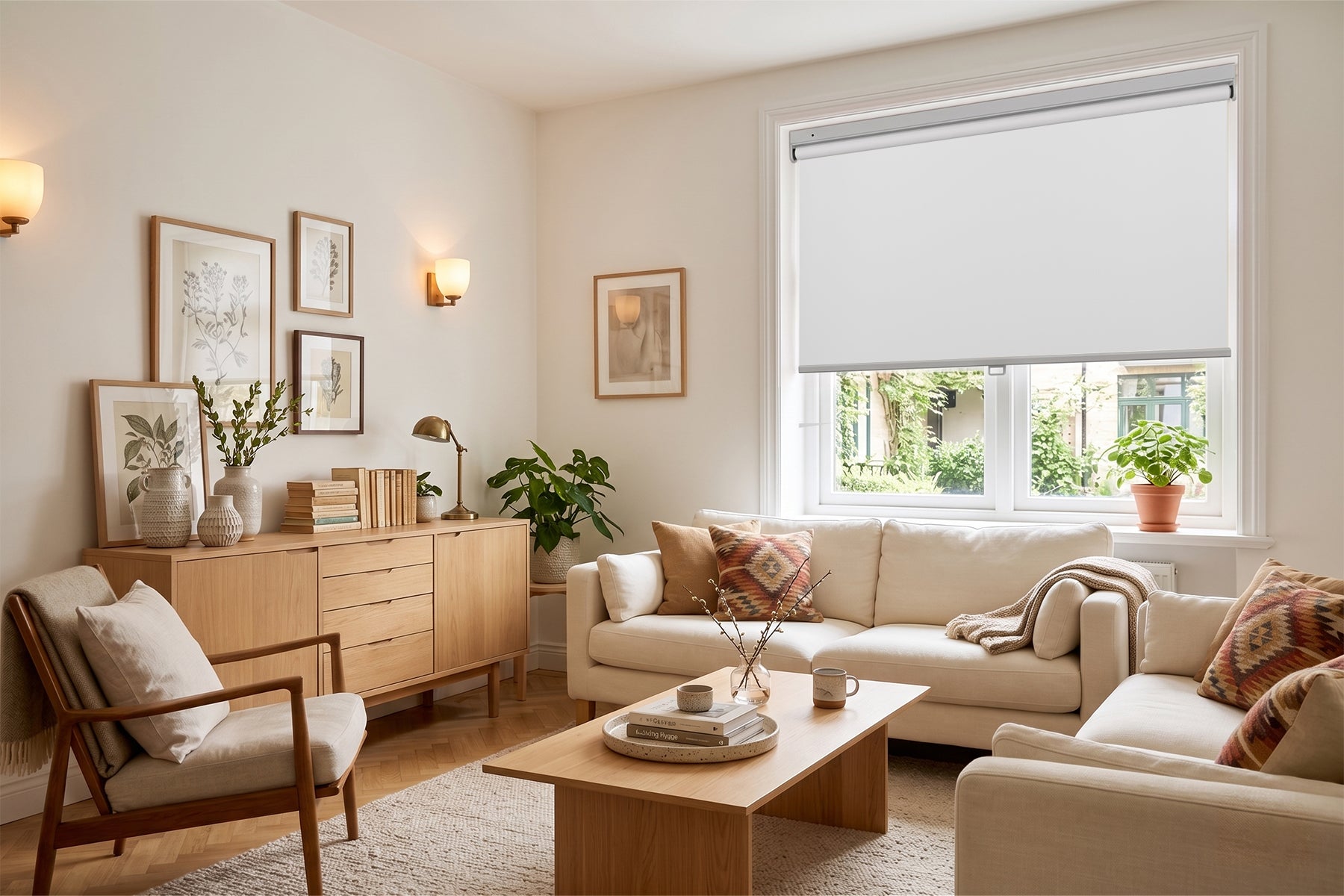
When space is limited, color becomes one of the most powerful design tools you have. The right palette can visually expand your apartment, making it feel brighter, airier, and more inviting, without moving a single wall. But color doesn't work alone. Elements like furniture, layout, and especially window treatments all play a role in how spacious your home feels.
In this guide, we'll explore five color palettes that are especially effective in small apartments, along with practical window treatment tips for small apartments to help you make the most of your space.
1.Light Neutral Colors for An Open, Airy Feel
Light neutrals are a go-to choice for making small spaces feel larger. Shades like soft white, warm beige, light gray, and creamy ivory reflect natural light, helping walls visually recede and creating an open, breathable atmosphere.
To enhance this effect, it's important to control how light enters the space. Pairing neutral walls with light roller shades or cellular shades in soft tones allows you to manage brightness throughout the day while maintaining a clean, uncluttered look. Their simple structure keeps the window area visually light, which is essential in smaller rooms.
Layering also matters. Combine neutral walls with subtle variations in furniture tones and soft textures, like linen or woven fabrics, to prevent the space from feeling flat while still keeping it visually open.

2.Soft Pastel Colors for Subtle Depth
If you want a bit more personality without overwhelming the room, soft pastel is an excellent choice. Colors like blush pink, pale sage, or mint green can add gentle depth while still reflecting light effectively.
Because pastels rely heavily on light to achieve their airy effect, your choice of window treatments becomes even more important. Light filtering cellular shades or Roman shades are a great match here, they soften incoming light and enhance the delicate tones of the palette, creating a calm and layered look.
For best results, keep the palette controlled. Let one pastel shade lead and support it with neutral furniture and decor. This ensures the room feels intentional and cohesive rather than visually busy.

3.Cool Tones for Spacious Vibes
Cool colors, such as soft blues, light grays and muted steel tones, naturally create a sense of distance, making walls appear farther away. In smaller apartments, this effect is extremely useful. Such tones reduce visual heaviness and create a calm, structured environment that feels more open than it actually is.
To maximize this effect, prioritize window treatments that allow natural light to flow freely while maintaining privacy. Cool-toned roller shades or vertical blinds work particularly well, as they diffuse sunlight and create a soft glow paired with crisp white accents.
You can also incorporate reflective surfaces like glass, mirrors, or subtle metallic finishes, to further amplify light and openness. Together, these elements create a space that feels calm, fresh, and visually larger.

4.Monochromatic Color Drenching for Added Depth
Using a single color across walls, trim, and even furnishings, often called color drenching, can make a small apartment feel more unified and spacious. By minimizing visual breaks, the eye moves more smoothly through the space.
To support this seamless look, opt for window treatments that blend effortlessly with the wall color. Cellular shades in matching tones are an excellent option, as their clean lines and subtle texture maintain continuity without drawing attention away from the overall palette.
Varying shades within the same color family adds depth without disrupting flow. This approach works especially well in studio apartments, where visual cohesion is key to avoiding a cramped feeling.

5.High-Contrast Accents Without Shrinking Space
While light palettes help open up a room, contrast adds definition and character. The key is restraint. Start with a light base, such as white or soft gray, and introduce darker elements in controlled ways.
For example, a predominantly white or neutral room can benefit from black or deep charcoal details in lighting fixtures and furniture legs, with window treatments in similar tones to tie the look together. These darker accents add definition and depth without overwhelming the space.
Keep contrast concentrated in a few focal points, such as window areas or key furniture pieces. When used correctly, contrast helps maintain an open feel while still adding visual interest and personality.

Additional Tips
Combine color, layout, and natural light for a cohesive look.
Color alone won't transform a space if the layout feels crowded. Arrange furniture to keep clear pathways and avoid blocking natural light, as this can instantly make your apartment feel more open. Coordinating your wall color with furnishings and window coverings also helps create a clean, unified look with less visual clutter.
If you're choosing the right blinds or shades for a small space, explore our guide to find styles that enhance light and openness.
Maximize natural light with inside-mount shades.
Mounting shades inside the window frame keeps the edges clean and allows more light to enter. This small adjustment can make a noticeable difference in how open and bright the room feels.
Keep window treatments minimal and proportional to the window.
Heavy or oversized coverings can visually shrink a room. Opt for streamlined blinds or shades that fit neatly within the window area, maintaining a clean and uncluttered appearance.
Choose lightweight materials (fabric, faux wood in light finishes)
Lightweight fabrics and materials help maintain an airy atmosphere. Soft textiles and light-finish faux wood blinds add warmth without introducing visual heaviness, making them ideal for small apartments.
Conclusion
Creating the illusion of space isn't about limiting your design choices, it's about using them wisely. Whether you prefer the simplicity of light neutrals, the softness of pastels, or the boldness of controlled contrast, the right color palette can dramatically transform how your apartment feels.
By combining colors with smart layout decisions and thoughtfully selected shades or blinds, even the smallest space can feel open, bright, and beautifully balanced.
Share:
How to Make A Small Apartment Feel Bigger Without Moving Anything
3 Window Treatment Trends Smart Homeowners Are Choosing in 2026