


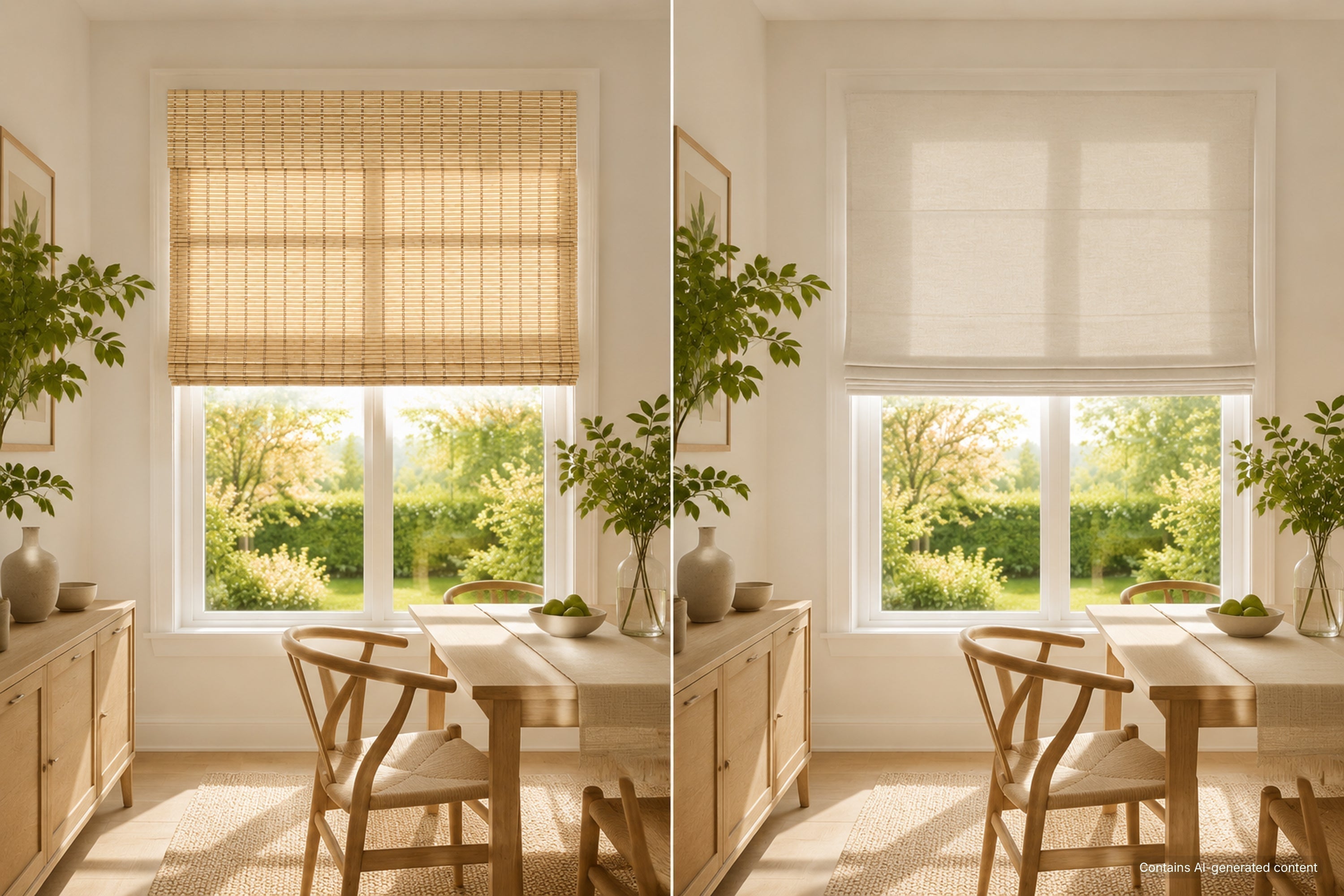
Are you trying to decide between bamboo woven shades and roman shades for your home? Choosing between the natural, textured look of bamboo woven shades and the clean, tailored elegance of roman shades can quickly become overwhelming. Both offer distinct advantages in light control, privacy, and overall style, but they create very different moods in a space. Add in factors like budget, maintenance, and everyday usability, and the decision becomes even more complex. If you’re unsure which direction to take, this guide will walk you through the key differences, pros and cons, and real-life performance of each option, so you can confidently choose the one that fits your home best.
Understanding Bamboo Woven Shades and Roman Shades
Before deciding which one works best for your home, it helps to understand what makes bamboo woven shades and roman shades different at their core. While both are popular window treatments, they offer very different materials, aesthetics, and everyday performance. These differences directly affect how they look, how they filter light, and how they feel in a space.
What Are Bamboo Woven Shades? Organic Texture with a Relaxed, Airy Feel
Bamboo woven shades are a broad category of window treatments made from natural materials such as bamboo, flax, ramie, jute, and other woven fibers. They are loved for their rich texture and organic character, bringing warmth, depth, and a relaxed, nature-inspired feel to any room. Rather than completely blocking sunlight, their woven construction gently filters natural light, creating a soft, inviting glow that makes interiors feel bright yet comfortable.
Within this category, there are several different styles, including roll-up bamboo shades and bamboo woven Roman shades. In this article, we'll focus on bamboo woven Roman shades, which combine the handcrafted beauty of natural woven materials with the elegant folding design of Roman shades. As they're raised, the shade stacks into soft, even folds, offering a more refined look while preserving the unique texture and character of natural fibers.
Because they're made from natural materials, bamboo woven Roman shades have a distinctive appearance that differs from fabric Roman shades. Many homeowners choose them to complement coastal, farmhouse, bohemian, Japandi, or modern organic interiors. For greater privacy and light control, they can also be paired with an optional privacy or blackout liner, making them both stylish and practical for everyday living.

What Are Roman Shades? Clean Lines, Soft Folds, and Flexible Light Control
Roman shades are a classic style of fabric window treatment that combines the softness of curtains with the streamlined look of blinds. Rather than rolling around a tube or stacking with slats, they lift into neat, horizontal folds, creating a tailored appearance that looks elegant whether the shade is fully lowered or raised.
Unlike bamboo woven shades, which are defined by their natural woven materials, Roman shades are defined by their folding construction. They are typically made from fabric, giving homeowners an extensive selection of colors, patterns, textures, and materials to suit virtually any decorating style, from modern and minimalist to traditional and luxurious.
Fabric choice also makes Roman shades highly adaptable in terms of performance. Depending on the material, they can gently diffuse daylight, provide enhanced privacy, or block outside light almost completely. Combined with a wide range of design options, this flexibility makes Roman shades one of the most versatile window treatments for living rooms, bedrooms, dining rooms, and other everyday spaces.

Bamboo Shades vs Roman Shades: Head-to-Head Comparison
To really understand the difference between bamboo woven shades and roman shades, it helps to compare them side by side. While they may serve the same basic purpose, their materials, performance, and visual impact create very different experiences in a space.
3.1 Material & Texture: Natural Warmth vs. Fabric Versatility
The easiest way to tell bamboo woven shades and Roman shades apart is by the feeling they bring into a room.
Bamboo woven shades have a natural richness that's difficult to imitate. Their woven texture catches your eye with subtle variations in color and pattern, so no two shades look exactly alike. Instead of striving for perfect uniformity, they celebrate the beauty of natural materials, making a space feel warmer, more relaxed, and effortlessly connected to nature.
Roman shades create a different impression. Their smooth fabric finish feels cleaner and more tailored, giving windows a softer, more polished appearance. Whether your style leans modern, classic, or somewhere in between, it's easy to find a fabric that blends seamlessly with the rest of your décor, allowing the shade to either make a statement or quietly complement the room.
Neither look is better, they're simply designed for different styles of living. If you're drawn to organic texture and a little natural character, bamboo woven shades are hard to beat. If you enjoy switching up colors, fabrics, or decorating styles over time, Roman shades give you much more creative freedom.

3.2 Style & Décor: Relaxed Natural Charm vs. Timeless Tailored Elegance
When choosing between bamboo woven shades and Roman shades, you're really choosing the mood you want your room to have. Do you want your windows to feel naturally textured, clean and modern, or soft and understated? Each style creates a completely different atmosphere.
If you're drawn to earthy, organic interiors, bamboo woven shades are hard to beat. Their woven texture adds warmth and character that feels relaxed rather than polished, making them a natural fit for coastal, Japandi, bohemian, modern farmhouse, and other nature-inspired spaces. They have a way of making a room feel lived-in from the very first day, as though the outdoors has quietly become part of the décor.
If your ideal space is crisp, uncluttered, and contemporary, smooth fabric Roman shades offer a different kind of beauty. Their clean lines and uniform finish complement modern, minimalist, and transitional interiors without competing for attention. Instead, they create a calm backdrop that lets furniture, artwork, and architectural details take center stage.
Somewhere in between are textured Roman shades, such as linen-look or slub fabrics. They soften the clean appearance of traditional fabric shades by introducing subtle texture, creating a look that's warm without feeling rustic and refined without feeling formal. They're an excellent choice if you love the simplicity of modern design but still want your space to feel cozy and inviting.
Rather than asking which style is better, ask yourself which room you'd enjoy coming home to every day. Bamboo woven shades celebrate the beauty of natural materials, smooth Roman shades create a sleek, contemporary feel, and textured fabric Roman shades strike a comfortable balance between the two.

3.3 Light Control & Privacy: Soft Natural Light or Customized Coverage?
The real question isn't whether bamboo woven shades or Roman shades can provide privacy, both can. It's how they get there and what kind of atmosphere they create along the way.
Bamboo woven shades are loved for the way they interact with natural light. Their woven fibers soften harsh sunlight into a warm, textured glow that brightens a room without feeling overly bright. If you enjoy waking up to gentle daylight or want your living room to feel light and airy, this naturally filtered effect is part of their charm.
For rooms that need more privacy or stronger light control, many bamboo woven shades can be paired with an optional blackout fabric liner. This adds another layer behind the woven material to improve room darkening, increase privacy, and block a significant amount of UV rays. The liner also helps protect both your furniture and the bamboo shade itself from prolonged sun exposure, reducing fading over time while preserving the beauty of the natural woven texture. The trade-off is cost. Because of the additional materials and craftsmanship involved, lined bamboo woven shades are typically more expensive than standard fabric Roman shades.
Roman shades take a more straightforward approach. Instead of adding a separate liner, you simply choose the fabric that matches your needs. Light-filtering fabrics create a soft, comfortable glow for everyday living, while blackout fabrics provide greater room darkening and privacy for bedrooms, media rooms, or nurseries. That flexibility makes it easy to tailor each room without significantly increasing the overall budget.
If your priority is enjoying the unique beauty of woven natural materials, bamboo woven shades deliver an atmosphere that's difficult to replicate, and adding a liner lets you enjoy that look with enhanced performance. If you're looking for the most cost-effective way to customize light control and privacy throughout your home, Roman shades are often the more practical choice.

3.4 Care and Maintenance: Different Materials, Different Priorities
Neither bamboo woven shades nor Roman shades are difficult to care for, but they do ask for your attention in different ways.
With bamboo woven shades, the focus is on preserving the natural beauty of the material. A quick dusting with a feather duster or the brush attachment of a vacuum is usually all that's needed for everyday care. Because they're made from natural woven fibers, they perform best in well-ventilated indoor spaces and benefit from avoiding prolonged exposure to excess moisture or intense direct sunlight. If your shades include a blackout liner, it can also help shield the bamboo from UV rays, reducing fading over time and helping maintain its natural color.
Roman shades shift the focus from the material itself to the fabric. Routine dusting or light vacuuming keeps them looking fresh, while many fabric styles can be removed for cleaning or are designed with stain-resistant or easy-care finishes. Depending on the fabric you choose, maintenance may be as simple as spot cleaning, machine washing, or occasional professional cleaning for more delicate materials.
So, which one asks for less attention? It really depends on what you're more comfortable with. If you don't mind giving natural materials a little extra care to keep them looking their best, bamboo woven shades reward you with warmth and character that only nature can provide. If you prefer the convenience of washable or easy-care fabrics and the flexibility to handle everyday spills or dust with minimal effort, Roman shades may fit your lifestyle a little better.
Which One Stands Out More?
At a glance, the difference is surprisingly simple.
Think of bamboo woven shades when you picture a natural woven look full of warmth and texture. Think of Roman shades when you picture a structured fabric look with clean lines and tailored style.
Everything else, from the mood they create to the way they fit into your home, builds on this fundamental difference.
How to Choose Between Bamboo Woven Shades and Roman Shades
Understanding the differences is only half the decision. The real question is how those differences fit your lifestyle, your space, and the way you live every day. The right choice isn't about which one is objectively better, it's about which one better suits your space, lifestyle, and design preferences. Before making your decision, consider the following questions to narrow down the best fit for your home.
Start with the Factors That Matter Most
When choosing between bamboo woven shades and Roman shades, it's easy to get caught up in the details. In reality, most homeowners make their decision based on four simple questions: What look do I want? How much flexibility do I need? What's my budget? And will everyone in the home use them safely?
For many homeowners, style is the deciding factor. If you want your windows to showcase the warmth and character of natural woven materials, bamboo woven shades are well worth the investment. Their handcrafted construction, finished edges, and coordinating valances create a refined look that stands apart from traditional bamboo roll-up shades.
If versatility is higher on your priority list, Roman shades offer more room to personalize your space. With a broad selection of fabrics, colors, and textures, they're easier to match with different decorating styles and are available across a wider range of budgets, making them a practical choice for everything from a single room refresh to a whole-home makeover.
Whichever direction you choose, cordless designs are available for both, so you don't have to compromise on convenience or family-friendly operation.
Don't Overlook These Practical Details
Once you've found the style you love, it's the everyday details that often determine how happy you'll be with your choice. From cleaning routines to room conditions, these practical considerations can make life a little easier in the long run.
These details may not make your decision on their own, but they can help you choose the shade that fits your home more naturally. If you appreciate simple upkeep and the timeless appeal of natural woven materials, bamboo woven shades are easy to enjoy with just a little routine care. If you're looking for greater flexibility in fabric performance, moisture resistance, or customization, Roman shades offer more ways to tailor each window to the needs of the room. And if energy efficiency is high on your list, both styles can be upgraded with functional liners, just keep in mind that these enhancements also add to the overall investment.
Smart Recommendations: Which Shade Works Best in Each Room?
Rather than asking which shade is better overall, it's more useful to ask which one works best in each room. Every space has its own purpose, and the ideal window treatment should support the way you use it. But choosing between them becomes much easier when you think about how each room is actually used. The perfect window treatment for a bedroom isn't always the best choice for a living room or kitchen. From sleeping and relaxing to entertaining and working, every space has its own priorities. Here's our room-by-room guide to help you find the best match.
1. Bedroom: Prioritize Better Sleep and Lasting Comfort
The bedroom is where light control and privacy matter most. Whether you're trying to sleep past sunrise, enjoy an afternoon nap, or create a cozy retreat at the end of the day, your window treatments should help the room feel restful whenever you need it.
If your dream bedroom is inspired by natural materials, bamboo woven shades can absolutely work here. Pairing them with a blackout liner allows you to enjoy their warm, handcrafted texture while significantly improving room darkening, nighttime privacy, and UV protection. The liner also helps protect the natural woven material from prolonged sun exposure, making it a worthwhile upgrade for windows that receive strong sunlight.
If your priority is achieving the most straightforward blackout performance, Roman shades are an excellent choice. With blackout fabrics available in a wide range of colors and textures, it's easy to create a dark, peaceful sleeping environment while coordinating with virtually any bedroom style.
Our recommendation: If you're designing a cozy, nature-inspired bedroom, bamboo woven shades with a blackout liner offer the perfect balance of organic beauty and everyday performance. If your focus is maximum room darkening with greater fabric and color flexibility, blackout Roman shades are a practical and versatile solution.
2. Living Room: Balance Natural Light with Everyday Style
Your living room is where your home's personality comes to life. It's a place for slow mornings, lively conversations, movie nights, and everything in between, so your window treatments should feel just as comfortable as the space itself.
If your goal is to create a relaxed, welcoming atmosphere, bamboo woven shades are a natural fit. Their rich woven texture adds warmth and dimension to the room, making windows feel like part of the décor rather than just a functional feature. They pair beautifully with wood furniture, woven accents, greenery, and neutral palettes, making them especially at home in coastal, Japandi, Scandinavian, bohemian, and modern organic interiors. If you want additional privacy or greater control over daylight, adding a privacy or blackout liner lets you enhance performance while preserving the beauty of the natural weave.
Roman shades offer a different kind of versatility. With an extensive selection of fabrics, colors, and textures, they're easy to coordinate with virtually any decorating style, whether you're designing a sleek contemporary living room, a timeless traditional space, or something in between. They can blend quietly into the background or become a design feature that ties the entire room together.
Our recommendation: If you want your living room to feel warm, textured, and effortlessly inviting, bamboo woven shades are an excellent choice. If you prefer greater flexibility to coordinate colors, fabrics, and decorative styles, light filtering natural linen Roman shades give you more design freedom while maintaining a polished, tailored look.
3. Study & Children’s Room: Create a Space That's Comfortable, Focused, and Family-Friendly
Whether it's a home office, a study nook, or a child's room, these spaces work best when they're comfortable, functional, and easy to live with every day. The ideal window treatment should provide pleasant daylight for work or play, operate safely, and adapt to the room's changing needs.
For studies and home offices, bamboo woven shades create an inviting environment with naturally softened daylight that helps reduce harsh glare while keeping the room feeling open and comfortable. Their warm, woven texture also adds a sense of calm, making long hours of reading, working, or studying feel less clinical and more enjoyable. If you need greater light control for video calls or afternoon sun, a privacy or blackout liner offers additional flexibility without changing the natural look of the shade.
In children's rooms, safety comes first. Both bamboo woven shades and Roman shades are available with cordless lift systems, making them a smart choice for homes with young children and pets. From there, the best option depends on your family's routine. Light-filtering shades create a bright, cheerful space for reading and play, while blackout options are better suited for nap times, early bedtimes, or children who are sensitive to light.
Our recommendation: For study spaces, choose the style that creates the atmosphere where you feel most productive, bamboo woven shades for a warm, natural feel or light filtering linen-like Roman shades for a clean, tailored look. For children's rooms, start with a cordless design, then select the light-filtering or blackout option that best supports your family's daily schedule.

4. Kitchen & Bathroom: Choose Materials That Keep Up with Everyday Life
Kitchens and bathrooms are some of the most demanding spaces in any home. Between steam from showers, humidity from cooking, and occasional splashes, window treatments here need to do more than look good, they need to handle everyday conditions with ease.
In these spaces, Roman shades made with performance fabrics are often a practical choice. Materials like polyester blends or moisture-resistant coatings are designed to hold up better in humid environments and are generally easy to wipe or spot clean. At the same time, they offer plenty of flexibility in color, texture, and light control, making it simple to match everything from modern kitchens to calm, spa-like bathrooms.
Bamboo woven shades, on the other hand, are best suited to dry or well-ventilated areas. Their natural fibers bring warmth and texture to a space, but they are more sensitive to prolonged moisture and high humidity. For this reason, they are generally more appropriate for kitchens with good ventilation, breakfast areas, or powder rooms rather than full bathrooms with regular steam exposure. With proper placement and routine dusting, they can still add a beautiful natural accent in the right setting.
Our recommendation: For bathrooms and high-humidity kitchens, performance-fabric waterproof Roman shades are the more reliable and low-maintenance option. Bamboo woven shades are better reserved for dry or well-ventilated kitchen spaces where natural texture is the priority and moisture exposure is limited.
Every room has different demands, and the right choice often depends on how that space is used day to day. Instead of looking for one “perfect” option for the entire home, it often makes more sense to match each room with what it truly needs, whether that’s natural texture, easier maintenance, or stronger moisture resistance.
Many homeowners even choose to combine both bamboo woven shades and Roman shades throughout the home, using each where it performs best.
With that in mind, let’s pull everything together and look at how to make the final decision with confidence.
Bamboo Woven Shades or Roman Shades: Which One Should You Choose?
If you've made it this far, you've probably realized there's no one-size-fits-all winner, and that's actually a good thing. Bamboo woven shades and roman shades are designed for different lifestyles, design preferences, and rooms, which is why both continue to be popular choices for today's homes.
If you love natural textures, soft filtered light, and a relaxed, organic feel, bamboo woven shades are a beautiful way to bring warmth and character into your space. If you prefer greater flexibility in fabric, light control, and overall design, roman shades offer a more tailored solution that adapts easily to different rooms and decorating styles.
There’s no single right answer, only what works best for your home. Whether you're updating a single room or planning a whole-home makeover, choosing the right window shades is an investment you'll appreciate every day. Explore our collection of bamboo woven shades and roman shades to find the style that fits your home and the way you live.
Frequently Asked Questions (FAQs)
1. How do you clean and maintain Bamboo Woven Shades?
Bamboo woven shades are easy to care for as long as they are kept in a suitable environment. Because they are made from natural woven fibers, they are best used in dry, well-ventilated spaces and should be kept away from prolonged moisture or heavy humidity.
For everyday cleaning, light dusting or using a vacuum with a soft brush attachment is usually enough. If needed, small spots can be gently wiped with a slightly damp cloth, but it’s important to avoid soaking the material. Harsh chemical cleaners should also be avoided, as they may affect the natural finish and texture over time.
2. Roman shades come in many fabric options. How do I choose the right one for my room?
Choosing the right fabric depends mainly on how the room is used.
For bedrooms and media rooms, blackout fabrics help reduce light and create a more restful, private environment. In living and dining areas, linen or textured fabrics are popular because they soften sunlight while adding warmth and depth. For kitchens and bathrooms, moisture-resistant or easy-clean fabrics such as polyester blends are typically more practical. In study areas or children's rooms, light-filtering fabrics help maintain brightness while reducing glare.
3. Which shade is better for a small apartment: Bamboo Woven Shades or Roman Shades?
Both can work well in smaller spaces, it depends on the atmosphere you want to create.
Bamboo woven shades have a naturally light, textured look that keeps windows visually simple and uncluttered, which can help a small room feel more open and relaxed. Roman shades, on the other hand, offer more control over color and fabric, making it easier to coordinate with compact interiors that need a more tailored or personalized look.
If your goal is a calm, airy feel, bamboo woven shades are a strong choice. If you want more design flexibility in a limited space, Roman shades offer more options.
4. Are Bamboo Woven Shades more eco-friendly than Roman Shades?
Bamboo woven shades are often associated with sustainability because bamboo is a fast-growing renewable material. Their natural construction also emphasizes minimal processing and material authenticity.
Roman shades are more flexible in this regard. Their environmental impact depends on the fabric chosen, options like linen, organic cotton, or recycled textiles can be more eco-conscious choices. If sustainability is important to you, it’s worth paying attention to material certifications and sourcing details for both options.
5. Can Bamboo Woven Shades or Roman Shades fit unusual window shapes?
Roman shades are generally more adaptable for specialty or irregular window shapes due to their fabric construction and wider customization range.
Bamboo woven shades can be made for many standard and moderately custom sizes, but their natural woven structure is less flexible when dealing with highly complex shapes such as arches or uniquely angled windows.
If your windows are standard or slightly custom-sized, both options can work well. For more challenging architectural shapes, Roman shades usually offer more flexibility.
Share:
The Ultimate Guide to Cellular Shade Fabrics
Roman Shades vs. Curtains vs. Blinds: Which Window Treatment Is Right for Your Home?