


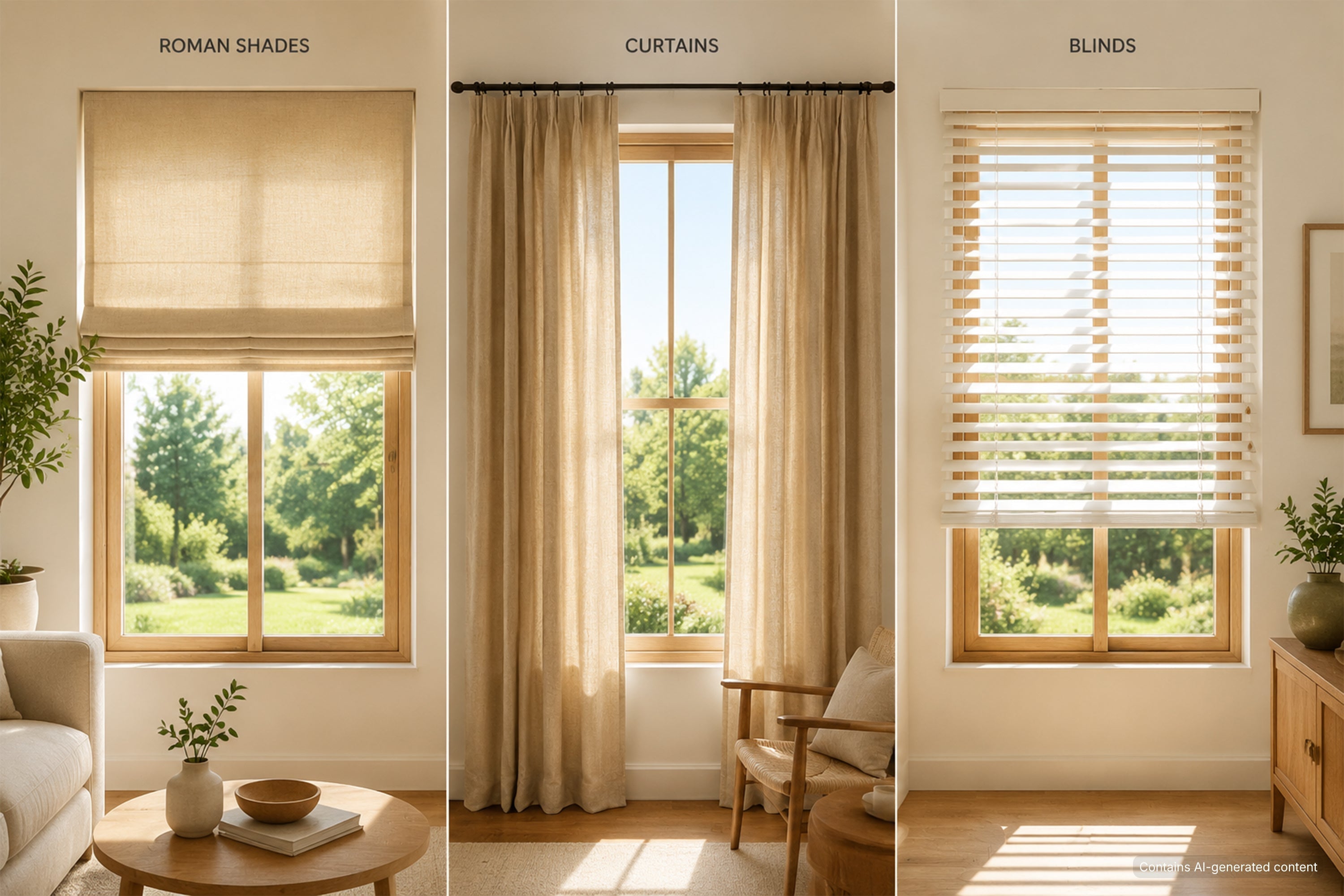
Not sure whether Roman shades, curtains, or blinds are the right fit for your windows? You're not alone. Each option has its own strengths, from creating a soft decorative statement to offering precise light control and improved energy efficiency. The best choice depends on your room, your lifestyle, and what matters most to you.
The right window treatment does much more than cover a window. It influences the amount of natural light in your room, enhances energy efficiency, complements your interior style, and even affects how spacious your home feels. While Roman shades deliver a clean, tailored look, curtains create softness and elegance, and blinds offer versatile light control for everyday living.
In this guide, we'll compare Roman shades, curtains, and blinds across design, functionality, installation, maintenance, cost, and ideal room applications, helping you confidently choose the window treatment that best matches your home and lifestyle.
Meet the Three Window Treatment Styles
1. Roman Shades:The Best of Fabric and Structured Design
If you've ever wondered why Roman shades look more refined than blinds but less formal than curtains, the answer lies in their unique construction. Roman shades are made from a single piece of fabric that folds into neat horizontal pleats as you raise them and unfolds into a smooth, tailored panel when lowered. This creates a clean, elegant appearance without taking up the wall or floor space that curtains often require.
Unlike blinds, which are built from individual slats that tilt to adjust light, Roman shades provide a continuous fabric surface. This gives windows a softer, more polished look while still maintaining a streamlined profile. Compared with curtains, they offer the warmth and texture of fabric but avoid the bulky, layered appearance that full-length drapes can create.
Because they combine decorative appeal with practical function, Roman shades work well in living rooms, bedrooms, dining rooms, and home offices. Whether your style is modern, farmhouse, Scandinavian, or traditional, their versatile design blends naturally with a wide range of interiors, making them a favorite choice for homeowners who want a balance of style, privacy, and everyday functionality.
2. Curtains:The Classic Choice for Warmth and Versatility
Curtains are often the first window treatment people think of, and for good reason. Made from flowing fabric panels that hang from a rod above the window, they instantly soften a room and create a welcoming, lived-in atmosphere. Unlike Roman shades or blinds, curtains extend beyond the window itself, allowing them to become a prominent part of the room's overall design rather than simply covering the glass.
One of the biggest advantages of curtains is their flexibility. Lightweight fabrics gently filter sunlight to create a bright, airy feel, while heavier materials can block more light, improve privacy, and even help reduce outside noise and drafts. They also come in an extensive range of colors, textures, patterns, and lengths, making it easy to complement everything from modern apartments to traditional homes.
Because of their decorative impact, curtains are especially popular in living rooms, bedrooms, and formal dining spaces where comfort and style are equally important. If your goal is to make a room feel warmer, taller, and more inviting, curtains remain one of the most timeless and versatile window treatment options available.

3. Blinds:The Smart Choice for Precise Light Control
Blinds are designed with functionality in mind. Instead of a continuous fabric panel, they use horizontal or vertical slats that can be raised, lowered, or tilted to control exactly how much light enters a room. This level of adjustability sets them apart from both Roman shades and curtains, making blinds an excellent choice for spaces where lighting conditions change throughout the day.
Their streamlined design also complements modern and minimalist interiors. Whether made from wood, faux wood, aluminum, or vinyl, blinds offer a clean, uncluttered appearance while providing flexible privacy. With a simple tilt of the slats, you can reduce glare, let in natural daylight, or block outside views without completely closing the window.
Because they're durable and easy to maintain, blinds are especially well suited to kitchens, bathrooms, home offices, and other high-traffic areas where practicality is just as important as appearance. If having precise control over light and privacy is your top priority, blinds are one of the most versatile window treatment options available.
At-a-Glance

As you can see, there's no single "best" window treatment, each one excels in different situations. Roman shades combine the softness of fabric with a tailored appearance, curtains create warmth and decorative impact, and blinds offer the greatest flexibility for controlling light and privacy. The right choice depends on how you use your space, your design preferences, and the level of functionality you need. Next, let's explore the key factors to consider before making your decision.
How to Choose the Best Window Treatment for Your Home
Start with What Matters Most
Now that you understand the strengths of Roman shades, curtains, and blinds, the next step is deciding which one best fits your home. Rather than asking which window treatment is "best," ask yourself what matters most in the room you're decorating. Is your priority staying within budget, controlling light and privacy, or achieving a particular design style? Your answers will naturally point you toward the right choice.
For many homeowners, budget is the starting point. Blinds are often the most affordable option and offer excellent everyday performance, making them a practical choice for multiple rooms. Curtains are available across a wide range of price points, depending on the fabric, size, and lining you choose. Roman shades typically require more craftsmanship and custom fitting, making them a higher initial investment, but one that many homeowners appreciate for their refined appearance and tailored finish.
Next, think about how you use the room. If you need flexible daylight throughout the day, such as in a home office or kitchen, blinds make it easy to adjust light and privacy without completely covering the window. For bedrooms or media rooms where minimizing outside light is the goal, blackout curtains often provide the highest level of light blocking. Roman shades offer an excellent middle ground, balancing privacy, light control, and a clean, elegant look for everyday living spaces.
Finally, consider the style you want to create. Roman shades add texture and sophistication without overwhelming a room. Curtains bring softness, warmth, and visual drama, especially in larger spaces with high ceilings. Blinds emphasize simplicity and clean lines, making them a natural fit for contemporary, minimalist, or functional interiors.
The chart below provides a quick side-by-side overview of these three key decision factors before we explore other practical considerations.
Don't Overlook These Practical Details
Once you've narrowed down your options based on budget, functionality, and style, a few practical considerations can help you make the final decision. These everyday factors may seem less obvious, but they can have a lasting impact on comfort, convenience, and long-term satisfaction.
If you have young children or pets, safety should be a priority. Modern Roman shades, curtains, and blinds are widely available with cordless or motorized operating systems, reducing the risk associated with dangling cords while creating a cleaner, more streamlined appearance.
Maintenance is another important consideration. Blinds are generally the easiest to keep looking tidy, as most slats can be dusted or wiped clean in just a few minutes. Roman shades typically need occasional vacuuming or spot cleaning to preserve the fabric, while curtains may require periodic washing or dry cleaning depending on the material and size.
Finally, think about energy efficiency, especially if your home experiences hot summers or cold winters. Curtains with thermal or blackout linings provide excellent insulation by helping reduce heat transfer through windows. Lined Roman shades also add an effective layer of insulation while maintaining a tailored appearance. Blinds can help manage sunlight and glare, but because of the small gaps between the slats, they generally provide less insulation than fabric-based window treatments.
Don't Forget About Window Measurements
Even the best window treatment won't perform as expected if it isn't the right size or mounted correctly. Before making a purchase, take a few minutes to consider how your windows are built and how you want the finished result to look. A proper fit can improve light control, enhance the overall appearance of the room, and help your window treatments operate more smoothly.
One of the first decisions is choosing between an inside mount and an outside mount. An inside mount fits neatly within the window frame, creating a clean, built-in look that works especially well in modern and minimalist interiors. An outside mount extends beyond the frame, covering more of the surrounding wall. This approach helps minimize light gaps, improves privacy, and can even make smaller windows appear larger.
It's also important to think about your window size and shape. Curtains are generally the most forgiving option for oversized, extra-wide, or floor-to-ceiling windows because they can easily span large openings. Roman shades and blinds, on the other hand, rely on precise measurements to ensure smooth operation and an even appearance, particularly for inside-mounted installations.
At last, consider whether standard sizes or custom-made window treatments are the better fit for your home. Ready-made products are often suitable for common window dimensions, while custom options are worth considering for unusually wide, tall, arched, or otherwise non-standard windows. A custom fit can reduce unwanted light gaps, improve overall functionality, and create a more polished, tailored appearance.
By now, you have a solid understanding of how to compare Roman shades, curtains, and blinds based on design, functionality, and installation. The final step is matching those strengths to the way each room is used. After all, the ideal window treatment for a bright, busy kitchen may be very different from the one that creates a comfortable and restful bedroom.
Choosing the Right Window Treatments for Every Room
Once you understand the differences between Roman shades, curtains, and blinds, the following is choosing the right option for each space. Every room has its own needs, from privacy and light control to moisture resistance and ease of use. The best window treatment is the one that complements both the function of the room and the way you live in it.
Living Rooms, Dining Areas & Large Windows: Balance Style and Easy Operation
Large windows and sliding glass doors often become the focal point of a living space, so the right window treatment needs to do more than provide privacy, it should enhance the room while remaining easy to use every day. For these spaces, curtains are often the most versatile choice, especially for wide windows and sliding doors, because of their coverage and decorative impact of full-length fabric panels. However, blinds are a great alternative for homeowners who prioritize adjustable light control and a modern look.
Curtains also add height and visual warmth to open spaces. Hanging them from near the ceiling to the floor can make windows appear larger and create a more elegant, finished look. For living rooms or dining areas with expansive glass, choosing a light-filtering fabric helps maintain natural brightness during the day while adding privacy when needed.
If you prefer a cleaner, more contemporary style, large-format blinds or Roman shades can also be excellent alternatives. Blinds provide adjustable light control for rooms that receive strong sunlight, while Roman shades offer a more tailored fabric look without taking up extra floor space, ideal for homeowners who want a balance between softness and simplicity.
If you are looking for a window solution designed for large living spaces and sliding doors, Hestia's vertical blinds or high-drape curtain series provides elegant fabric coverage with a refined appearance, helping transform large glass areas into a comfortable and stylish part of your home. You can explore the available styles and sizing options to find the right fit for your space.
Bedrooms & Studies: Create a Private and Comfortable Retreat
Bedrooms and studies have a completely different set of priorities. Instead of focusing on creating a dramatic visual impact, these spaces need window treatments that support privacy, comfort, and concentration, benefiting from solutions that help control light, reduce distractions, and create a more relaxing environment. For these spaces, Roman shades are often an excellent choice because they combine the softness of fabric with a clean, structured appearance, creating a calm backdrop without adding visual clutter.
In bedrooms, Roman shades with blackout or room-darkening fabrics can help minimize outside light and create a more restful sleeping environment. Their streamlined design also works well in smaller rooms where full-length curtains may feel too bulky. For studies or home offices, light-filtering Roman shades can soften harsh sunlight while maintaining a comfortable atmosphere for reading, working, or screen use.
That said, other options may also suit different needs. Blackout curtains are ideal for bedrooms where maximum darkness and extra insulation are the top priorities, while blinds offer precise adjustment when you need to control glare throughout the day, especially in a workspace with a desk near the window.
If you are looking for a refined window solution for bedrooms or studies, Hestia’s blackout Roman shades offer tailored sizing and fabric options designed to balance privacy, light control, and interior style. You can explore different materials and configurations to find a solution that fits your room’s needs.
Kitchens & Bathrooms: Prioritize Moisture Resistance and Easy Care
Unlike bedrooms or living spaces, kitchens and bathrooms place extra demands on window treatments. These areas are exposed to humidity, water splashes, cooking residue, and frequent cleaning, so the best choice should be easy to maintain while standing up to everyday use. For these spaces, blinds are often the most practical option, especially moisture-resistant styles that can be quickly wiped clean and adjusted to control light and privacy.
Blinds also work well in kitchens and bathrooms because their streamlined design takes up minimal space and avoids the heavy fabric surfaces that may absorb moisture or odors over time. Adjustable slats allow you to let in natural light while maintaining privacy, making them a functional solution for windows above sinks, countertops, or in bathrooms where ventilation and daylight are important.
That said, the right choice can depend on the exact location. In a kitchen dining area or a bathroom with good ventilation and limited exposure to moisture, some fabric Roman shades with easy-care materials can add warmth and style. However, for areas directly exposed to steam, splashes, or frequent cleaning, durable blinds are usually the safer and more convenient choice.
If you are looking for a window treatment designed for moisture-prone spaces, Hestia’s water-resistant blinds provide a practical solution with a clean appearance, helping you maintain comfortable light control and privacy while handling the demands of kitchens and bathrooms. You can explore the available styles and specifications to find the option that best fits your space.
Layering Window Treatments: Combine Style and Function
Sometimes one window treatment cannot do everything. You may want the precise light control of blinds, the soft texture of fabric, and the ability to adjust privacy throughout the day. This is where layering comes in, a design approach that combines two window treatments to create a more flexible and polished solution.
A popular combination is pairing blinds or Roman shades with curtains. The inner layer provides practical benefits such as adjustable light control and daytime privacy, while the outer curtains add warmth, texture, and a decorative finishing touch. Together, they create a more dimensional look while giving you greater control over the atmosphere of your room.
Layered window treatments work especially well in living rooms, bedrooms, and large-window areas where both appearance and performance matter. For example, you can keep curtains open during the day to enjoy natural light while adjusting the blinds or shades to reduce glare. In the evening, closing both layers creates a cozier feel with enhanced privacy.
If you want to create a more refined and versatile window design, Hestia offers complementary window treatment options that can be combined to match different styles and functional needs. Explore our available shades, blinds, and curtain collections to find a layered solution that works for your space.
Final Thoughts: Choose What Works Best for Your Home
Choosing between Roman shades, curtains, and blinds is not about finding a single "best" window treatment, it is about finding the option that fits your space, lifestyle, and daily needs. Each style has its own strengths: Roman shades bring a tailored and refined look, curtains add softness and warmth, and blinds provide flexible control over light and privacy.
The right choice depends on what matters most in your home. Consider how you use each room, how much light and privacy you need, the style you want to create, and how much maintenance you prefer. When functionality and design work together, your window treatments can become more than a practical necessity, they can complete the look and feel of your space.
Still deciding which option is right for your windows? The following FAQs cover some of the most common questions about Roman shades, curtains, and blinds to help you make a more confident choice.
FAQ
1. Can I install Roman shades, curtains, or blinds by myself?
Installation difficulty varies depending on the product type and mounting method. Curtains are usually the most flexible because they only require installing a rod or track, while blinds and Roman shades require more precise measurements for a proper fit. Many ready-made shades and blinds come with DIY-friendly hardware, but custom-sized options may require more careful installation to ensure smooth operation and a polished appearance.
2. What window treatments work best for unusual or oversized windows?
For large, extra-wide, arched, or uniquely shaped windows, the best choice depends on both the window structure and your design goals. Curtains are often the most flexible solution for very large openings because they can cover wide areas easily. Roman shades and blinds can also work well with custom measurements, providing a cleaner, more tailored appearance. For non-standard windows, accurate measuring and customized solutions are usually worth considering.
3. Are motorized shades really worth it compared with manual shades?
Motorized window treatments are especially useful for hard-to-reach windows, large glass doors, and rooms with multiple shades that need frequent adjustment. Hestia's motorized window treatments are designed with quiet operation and smooth movement, allowing shades to open and close with minimal noise. With remote or smart control options, you can easily adjust multiple shades at once, create a comfortable lighting environment, and manage natural light throughout the day without manually adjusting each window. For standard-sized, easily accessible windows, manual options may still provide excellent performance at a lower cost.
4. What are the safest window treatments if I have kids or pets at home?
Yes. For households with children or pets, cordless and motorized options are recommended because they eliminate exposed hanging cords and create a cleaner, safer window environment. Modern cordless shades, blinds, and motorized systems provide smooth operation while maintaining a streamlined appearance. Hestia offers cordless and motorized configurations across its window treatment collections, allowing homeowners to choose a safer operating style based on their needs.
5. Which window treatment is easiest to clean and maintain?
Keeping your window treatments looking fresh does not have to be a time-consuming task. In general, blinds are the easiest to maintain because dust can usually be removed with a quick wipe or duster. Fabric curtains may need occasional washing or professional cleaning depending on the material, while Roman shades typically only require light vacuuming or spot cleaning. Choosing high-quality, easy-care fabrics can make routine maintenance even simpler.
Share:
Bamboo Woven Shades vs. Roman Shades: Which One Is Right for Your Home?
Small Cell VS. Large Cell Honeycomb Shades: Which Is Right for Your Windows?