


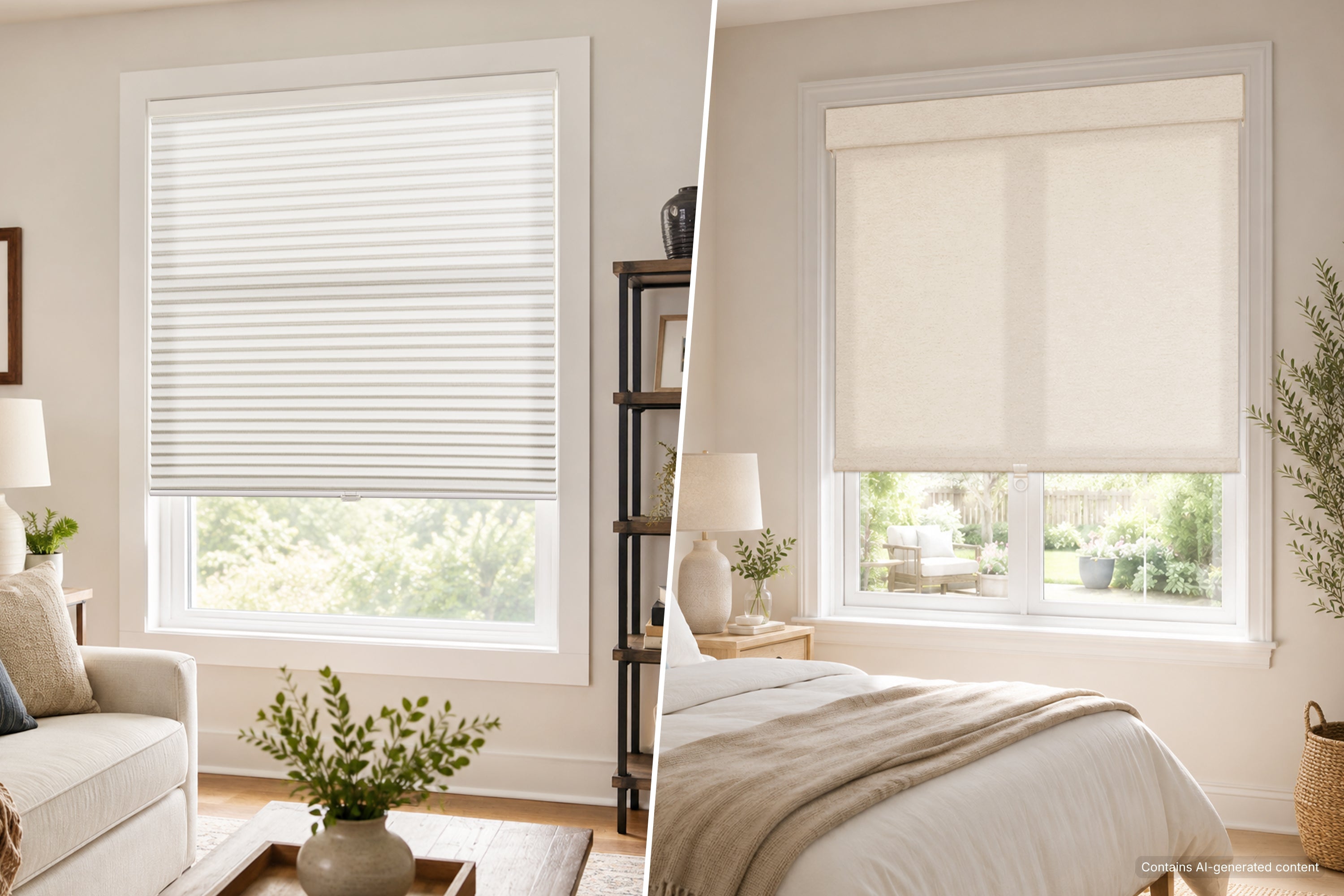
If you've narrowed your window treatment choices down to Cellular Shades and Roller Shades, you're already looking at two of the most popular options for modern homes. But while they may look similar at first glance, they solve different problems.
Are you hoping to keep your home cooler in summer and warmer in winter? Looking for a sleek, minimalist style? Or simply trying to find shades that offer the right balance of privacy, light control, and budget?
The best choice depends on how you use your space. In this guide, we'll compare Cellular Shades and Roller Shades side by side, from design and light control to insulation, maintenance, and cost, so you can confidently choose the option that works best for your home.
Cellular vs. Roller Shades: A Quick Structural Overview
At first glance, Cellular Shades and Roller Shades can look surprisingly similar. Both offer a clean fabric appearance and are available in light-filtering or blackout options. The biggest difference isn't something you'll notice from across the room, it's how they're built.
That hidden design is what gives each shade its own personality. It influences how well the shade insulates, how it filters light, and the overall look it brings to a room. Once you understand the construction, the differences between the two become much easier to see.
Cellular Shades: Designed for Comfort and Energy Efficiency
Cellular Shades, often called honeycomb shades, get their name from the distinctive honeycomb-shaped pockets hidden inside the fabric. Those air-filled cells do much more than add visual interest. They create a layer of insulation between the window and your living space, helping slow heat transfer throughout the year.
In practical terms, that means your rooms stay more comfortable no matter the season. During the summer, the honeycomb structure helps reduce heat coming in through the windows. In winter, it helps keep warm indoor air from escaping. As a bonus, those same air pockets also absorb some outside noise, making Cellular Shades a favorite for bedrooms, nurseries, and home offices where comfort and quiet are especially appreciated.
Their pleated construction also gives the shades a softer, more textured look than flat fabric window treatments. Rather than disappearing into the background, Cellular Shades add subtle depth and dimension to a window, creating a warm, inviting feel. The trade-off is that this specialized design typically comes at a higher price than standard Roller Shades, but for many homeowners, the added comfort, energy efficiency, and cozy appearance make the investment worthwhile.
Roller Shades: Simple, Versatile, and Modern
If Cellular Shades are all about what's happening inside the fabric, Roller Shades embrace the beauty of simplicity. Made from a single piece of fabric, they roll neatly into a compact tube when raised, leaving your window clean, open, and free of visual clutter. It's this understated design that has made Roller Shades a longtime favorite in modern homes.
Their flat fabric panel also offers tremendous design flexibility. Beyond different light-control options, the quality of the fabric itself can make a noticeable difference. A well-made Roller Shade hangs flatter, operates more smoothly, and keeps its clean appearance over time, making it feel just as refined as it looks.
Of course, simplicity comes with a trade-off. Without the insulating air pockets found in Cellular Shades, Roller Shades don't provide the same level of thermal efficiency or sound absorption. But if your priorities are a streamlined appearance, easy maintenance, and flexible design options, they're a practical choice that works beautifully in almost any room.
Cellular vs. Roller Shades: Which Factors Matter Most?
Now that we've looked at how Cellular and Roller Shades are built differently, the next question is: how do those differences actually affect your everyday life?
There isn't one "better" window shade for every home. The right choice depends on what matters most to you, whether that's keeping your rooms comfortable year-round, creating a certain design style, staying within budget, or finding a shade that's easy to live with every day.
To make the decision easier, let's start with the factors that usually have the biggest impact on your choice, then explore the smaller details that can help you find the best match for each room and lifestyle.
The Big Decisions: Comfort, Style, and Everyday Living
Before comparing every small detail, most homeowners are really trying to answer three simple questions:
- Will my home feel more comfortable?
- Will the shades match my style?
- Will they fit my budget and lifestyle?
Quick Comparison
When it comes to choosing between Cellular and Roller Shades, comfort is often where the biggest difference appears. Cellular Shades are designed with insulation in mind, their honeycomb structure creates small air pockets that help slow heat transfer and make rooms feel more comfortable throughout the year. They can also help soften outside noise, which is why they're often a favorite for bedrooms, nurseries, and home offices. Roller Shades still do an excellent job controlling sunlight and privacy, but their strength lies more in their fabric choices than insulation. With options ranging from solar fabrics to blackout materials, they give homeowners plenty of ways to shape the light in a room.
Style and budget are important, but so is long-term satisfaction. Two shades may look almost identical online, yet differences in fabric quality, edge finishing, and operating systems often become much more noticeable after months or years of everyday use. Looking beyond appearance can help you choose window treatments you'll enjoy living with for the long run.
The Details That Matter After Installation
Quick Comparison
The big differences between Cellular and Roller Shades don't always show up on installation day, they show up months and years later. How easy are they to clean after a busy week? How smoothly do they fit into your daily routine? How well do they handle the little moments that happen in a real home?
For low-maintenance living, Roller Shades have a natural advantage. Their flat fabric surface leaves fewer places for dust to collect, making regular care as simple as a quick wipe or light dusting. Cellular Shades need a little more attention because of their honeycomb structure, but newer fabrics are designed with easier maintenance in mind, so keeping them fresh is much simpler than many homeowners expect.
When it comes to comfort and convenience, both styles offer plenty of room for customization. A cordless operating system creates a cleaner look while adding an extra layer of safety for homes with children and pets. Beyond that, options like blackout fabrics, motorized controls, and UV protection allow either shade style to be tailored to your specific needs. The best choice isn't about picking the shade with the longest feature list, it's about choosing the features that make your everyday life easier.
Room-by-Room Recommendations
After comparing all the features, there’s still one question that matters most: where will these shades actually live in your home?
A bedroom, kitchen, and living room all have different needs. Some spaces need better insulation and a quieter atmosphere, while others need easy cleaning, flexible light control, or a style that complements your décor. Instead of looking for one shade that works everywhere, it’s often better to match each room with the features that matter most.
Bedroom: Create a Quieter, More Comfortable Sleep Space
Your bedroom is one of the few places in your home where comfort matters around the clock. Whether you're trying to block early morning sunlight, reduce outside distractions, or maintain a comfortable temperature throughout the year, the right window treatment can have a noticeable impact on the quality of your sleep.
This is where Cellular Shades often stand out. Their honeycomb construction creates an insulating layer between the window and the room, helping soften outside noise while reducing heat gain in summer and heat loss in winter. Combined with blackout fabrics, they can create a darker, more restful environment that's well suited to bedrooms of all sizes.
When comparing bedroom shades, it's worth looking beyond blackout performance alone. Accurate sizing, minimal light gaps, and smooth everyday operation can make just as much difference to the overall experience. For homeowners looking for both room darkening and flexible light control, HESTIA Blackout Day and Night Cellular Shades offer one example of how these features can work together in a custom-made solution.
Kitchen & Bathroom: Choose Materials That Can Handle Everyday Moisture
Kitchens and bathrooms ask a little more of your window treatments than most other rooms. Steam from a hot shower, splashes around the sink, and everyday cooking can all expose fabrics to moisture, so choosing a material that's easy to care for is just as important as choosing the right style.
The good news is that you don't have to choose between practicality and design. Both Cellular Shades and Roller Shades are available in moisture-resistant fabrics, making either a suitable option for these spaces. The difference comes down to what you want from the shade itself. If you prefer added insulation and a softer, more textured look, HESTIA Waterproof Honeysilk Cellular Shades feature a water-repellent finish inspired by the lotus effect, allowing water to bead up and roll off the fabric more easily while maintaining the comfort benefits of a honeycomb design. In moisture-prone spaces, easy maintenance often comes down to thoughtful fabric engineering rather than appearance alone. A durable surface treatment can help shades stay looking fresh with less day-to-day effort.
If your priority is a clean, minimalist appearance with the easiest possible upkeep, Waterproof Roller Shades are another excellent choice. Their smooth, flat surface wipes clean with minimal effort, making them a practical fit for busy kitchens, bathrooms, and laundry rooms where convenience is part of everyday living.
Living Room: Let Your Lifestyle Lead the Choice
The living room is where window treatments often have to strike the toughest balance. You want plenty of natural light during the day, enough privacy in the evening, and a style that complements the rest of your home, all without making the space feel dark or closed in. That's why there's no one-size-fits-all answer here.
Since living rooms are often the most visible space in a home, details like fabric texture, color consistency, and a clean, tailored fit tend to stand out more than homeowners expect. These finishing touches can have just as much impact on the overall design as the shade style itself. If your goal is to create a bright, open space with clean architectural lines, Roller Shades are a natural fit. Their streamlined profile and wide selection of fabrics make it easy to fine-tune the amount of daylight entering the room, whether you want to soften afternoon glare, protect furniture from direct sunlight, or preserve the view outside. They're also a popular choice for larger windows and sliding glass doors, where a simple, uncluttered look can help the room feel more spacious.
Cellular Shades, on the other hand, are worth considering if comfort is just as important as appearance. Their honeycomb construction helps reduce heat gain from large windows while adding a softer, more layered look to the room. In homes where the living room receives strong afternoon sun or serves as a gathering space year-round, the added insulation can help create a more comfortable environment without sacrificing style.
Kids' Room & Nursery: Focus on Comfort, Safety, and a Calming Space
A child's room does more than provide a place to sleep, it's where they play, learn, and grow. When choosing window treatments, it's worth thinking beyond light control alone. Gentle daylight, safe operation, and materials that support a comfortable indoor environment can all make a difference in creating a space that feels calm and welcoming.
No matter which shade style you choose, a cordless operating system is one of the most important features to look for, helping create a cleaner, safer environment for children and pets. Soft, neutral colors are also a popular choice for nurseries and kids' rooms, as they create a soothing backdrop that can easily grow with your child's changing tastes.
Many families also pay closer attention to the materials used in window treatments. Choosing thoughtfully designed fabrics and finishes can provide additional peace of mind, particularly in spaces where children spend a great deal of time. For families who prioritize this, HESTIA's Dehyde-Free Cellular Shades are one option designed for homeowners who want to reduce unnecessary chemical concerns while still enjoying the comfort, privacy, and gentle light diffusion that Cellular Shades are known for.
Every room has its own priorities, and your window treatments should reflect them. Once you understand what each space needs most, choosing between Cellular Shades and Roller Shades becomes much less about finding the "best" option and much more about finding the right fit.
By this point, you may already know which shade style suits your home. The final step is choosing a product that's made to perform well over time. Accurate measurements, quality fabrics, reliable operating systems, and responsive customer support all play an important role in how satisfied you'll be long after installation.
Finding the Right Fit for Your Home
Choosing between Cellular Shades and Roller Shades is only part of the decision. Equally important is choosing window treatments that are thoughtfully designed, carefully made, and tailored to the way you live. When quality materials, precise craftsmanship, and personalized support come together, the result is more than a better-fitting shade, it's a home that feels more comfortable every day.
FAQs
1.Which option is better for homes with children or pets?
Both Cellular Shades and Roller Shades can be excellent choices for family homes, especially when equipped with a cordless lift system, which eliminates exposed cords and creates a cleaner, safer environment for children and pets.
Beyond the operating system, it's also worth considering the fabric itself. High-quality fabrics used in both shade styles are designed for everyday durability, helping them withstand regular use. If you have pets that tend to scratch or paw at window treatments, Roller Shades may have a slight advantage because their flat fabric surface is less tempting to climb and easier to wipe clean. Cellular Shades, meanwhile, are a great option for creating a quieter, more comfortable environment in nurseries and children's bedrooms thanks to their insulating honeycomb design.
2.Can I use Cellular Shades and Roller Shades in the same home?
Absolutely. Many homeowners mix the two styles to match the needs of different rooms. For example, Cellular Shades work well in bedrooms where insulation and room darkening are priorities, while Roller Shades are a popular choice for living rooms, kitchens, and home offices thanks to their clean appearance and versatile fabric options.
3.What should I look for when ordering custom shades?
Beyond selecting the right fabric and color, accurate measurements, precise manufacturing, and clear installation guidance all contribute to how well custom shades fit and perform. Many homeowners also appreciate brands that offer design consultation before ordering, helping them choose the right mount, fabric, and operating system for each room.
4.Do Cellular Shades or Roller Shades provide better blackout performance?
Both shade styles can provide excellent room-darkening performance when paired with blackout fabrics, but they achieve it in different ways.
Roller Shades use a continuous piece of fabric, which creates a clean barrier across the window and is often chosen when maximum light blocking is the priority. Cellular Shades, on the other hand, are available in several constructions—including single-cell, double-cell, and cell-in-cell designs, allowing homeowners to choose different levels of light control and insulation. Blackout Cellular Shades combine room-darkening fabrics with insulating air pockets, helping create a darker, quieter, and more comfortable sleeping environment.
Whichever style you choose, keep in mind that a small amount of light may still enter around the edges of inside-mounted shades. If maximum darkness is important, an outside mount or side channels can further reduce light gaps.
5. Are Cellular Shades and Roller Shades available with motorized operation?
Yes. Both Cellular Shades and Roller Shades are available with motorized lift systems, offering a convenient way to raise or lower your shades with the touch of a button or a remote control. Motorized operation is especially helpful for large windows, hard-to-reach areas, or households that simply want a more effortless everyday experience.
The available control methods may vary by product, so it's always worth checking the specifications if you're looking for features such as remote control, rechargeable batteries, or integration with other home automation devices.
Share:
Roman Shades vs. Roller Shades: Which Window Treatment Is Right for Your Home?
Window Treatment Solutions Guide: How to Choose Blinds & Shades by Room, Style & Budget