


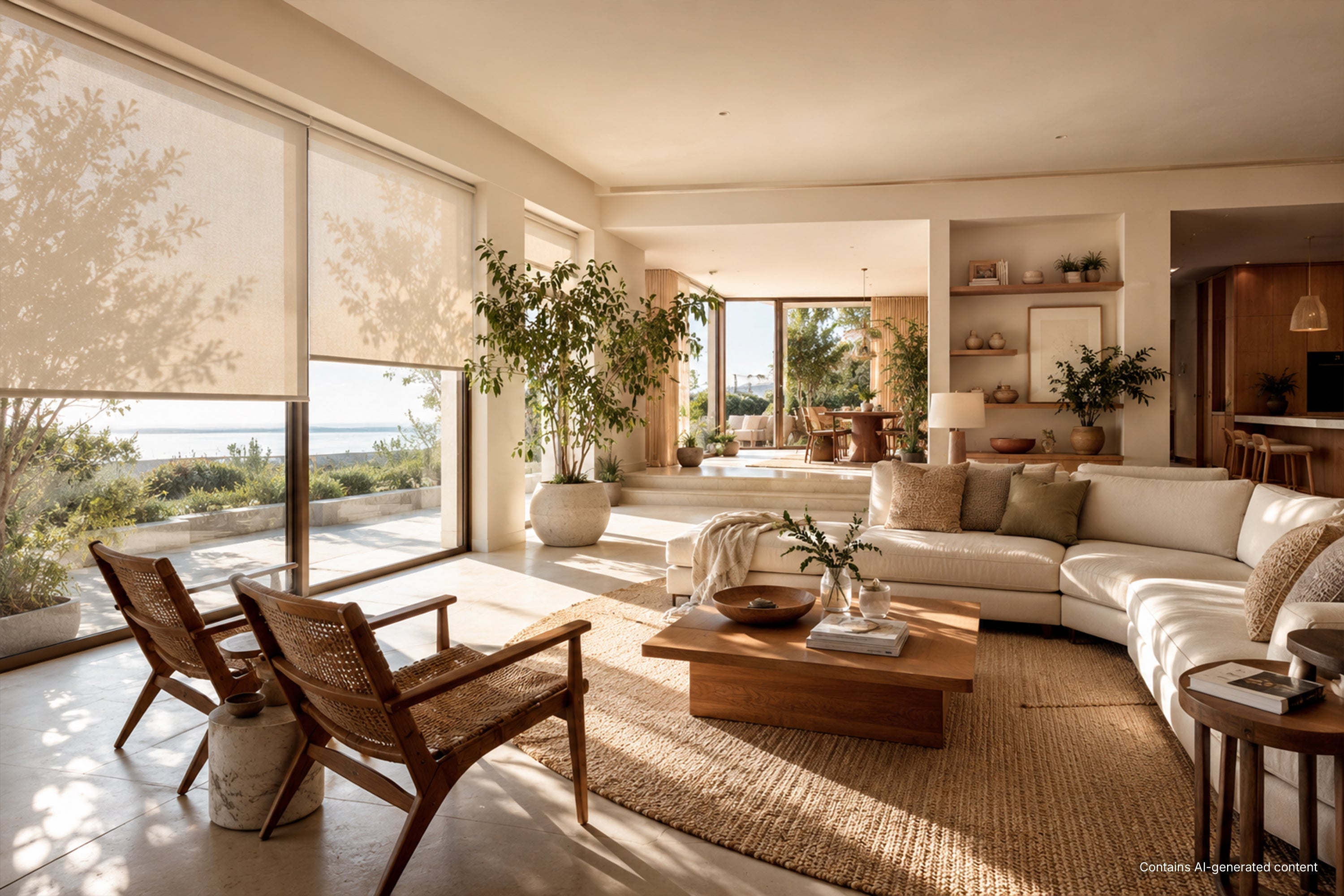
As we look ahead to 2026, window treatments are playing a bigger role in interior design than ever before. No longer viewed simply as functional window coverings, blinds, shades, and drapery are becoming key elements for creating personalized, energy-efficient, and technology-driven living spaces.
The latest window treatment trends 2026 reflect a growing demand for customization, sustainability, smart home integration, and enhanced everyday comfort. From bespoke designs and eco-conscious materials to motorized operation and layered treatments, homeowners are seeking solutions that combine style, functionality, and a more intentional approach to modern living.
In this guide, we'll explore the interior design trends shaping the future of window treatments and how they can help transform your home.
The Art of Personalization: Curating Your Window Story
In 2026, window design is moving far beyond the idea of ready-made solutions. Instead of choosing from fixed styles, homeowners are embracing a more intentional approach, where every element of a window treatment can be adjusted to suit both the architecture of the space and the way it is used in daily life.
Customization today is not about adding complexity, but about creating harmony between function and design. From the feel of the fabric to the way a shade operates, each decision contributes to how a room looks, feels, and performs throughout the day.
One of the most noticeable areas of personalization is fabric selection. Beyond color and texture, materials now play a functional role in shaping interior comfort. In spaces like kitchens and bathrooms, for example, moisture-resistant or upgraded protective fabrics are becoming more common, while softer woven textures are preferred in living areas where light diffusion and atmosphere matter more.
How a window treatment operates is also part of the design experience. Different lifting systems and mounting styles allow homeowners to balance convenience, safety, and visual simplicity. A clean inside mount can create a built-in architectural effect, while alternative configurations may be chosen to improve light control or adapt to specific window structures.
Even the finishing details contribute to the overall design language of a space. Subtle choices in cassette styling, color coordination, and bottom rail finishes help window treatments blend seamlessly with surrounding furniture, trim, and hardware, creating a more unified interior look.
Finally, precise sizing has become an essential part of modern design expectations. Instead of adapting windows to standard dimensions, treatments are now tailored to the exact proportions of each space, helping them feel like a natural extension of the architecture rather than an added layer.
In this way, personalization is no longer about selecting individual features, it’s about shaping a window treatment that works intuitively within the rhythm of a home.

A Greener Horizon: Sustainability & Eco-Conscious Design
Sustainability in 2026 is showing up less as a strict “eco label” and more as a natural design direction shaped by comfort, texture, and how people actually live in their homes. Instead of focusing only on environmental messaging, homeowners are leaning toward materials and finishes that feel lighter, more natural, and more connected to everyday spaces.
One of the clearest expressions of this shift is the rise of natural-inspired fabrics. Linen, linen blends, woven textures, and soft organic-looking materials are now widely used across blinds, shades, and drapery. These materials bring a relaxed, breathable feel that works especially well in spaces where natural light is part of the atmosphere. In kitchens, for example, linen-style roller shades help soften bright sunlight while keeping the space fresh and airy. On patios or sunrooms, woven shades create a gentle filter for outdoor light, making the transition between indoor and outdoor living feel more seamless. Even in living rooms and bedrooms, these textures add quiet warmth without overwhelming the space.
At the same time, material innovation is quietly improving how these products are made. Many modern window treatments now incorporate recycled fibers or low-emission production methods, but for most homeowners, the real impact is felt in everyday comfort, fewer harsh odors, softer finishes, and materials that feel safer and more refined in daily use.
Durability is also becoming part of the sustainability mindset. Instead of frequently changing styles, people are choosing window treatments that can adapt across different interior looks over time. Neutral tones, natural textures, and timeless fabric choices make it easier for blinds and shades to stay relevant as home styles evolve.
In 2026, eco-conscious design is ultimately less about making a statement and more about creating spaces that feel calm, natural, and easy to live in, morning light in the kitchen, filtered sun on a patio, or a softly shaded bedroom at the end of the day.

Sensory Design: Where Light, Texture, and Atmosphere Come Alive
In 2026, window treatments are no longer chosen purely for how they look, they’re increasingly defined by how they feel within a space. Beyond color and style, homeowners are paying closer attention to the quality of light, the texture of fabrics, and the overall atmosphere created when a room comes to life throughout the day.
Light plays a central role in this shift. Instead of simply blocking or filtering sunlight, modern blinds and shades are designed to shape it. A sheer linen fabric can soften morning light into a calm glow, while structured blackout materials create bold contrast and depth in bedrooms or media spaces. Even woven and subtly perforated surfaces are being used to create layered patterns of light and shadow that change as the day moves.
Texture is just as important. The experience of touching a material has become part of the design decision itself. Smooth roller shades bring a clean, minimal feel that suits modern interiors, while linen blends and fabric drapery introduce softness and warmth. In more expressive spaces, heavier textiles like velvet or structured weaves add a sense of richness that can’t be achieved visually alone.
Acoustics also play a subtle but meaningful role in this sensory shift. Heavier drapery and layered treatments can help soften sound within a room, creating a quieter and more relaxed environment, especially in open-plan living areas or bedrooms where comfort is key.
Together, these elements reflect a broader 2026 design direction: window treatments are becoming tools for shaping atmosphere, not just decorating windows. Light, texture, and sound now work together to create interiors that feel more immersive, more comfortable, and more alive.

Effortless Living: The Rise of Everyday Motorization
Motorized window treatments have quietly moved from a luxury upgrade into a practical feature of modern homes. In 2026, they are no longer viewed as high-tech additions reserved for smart homes or premium interiors, but as a natural part of everyday comfort and convenience.
One of the biggest shifts is how simple the experience has become. Instead of complicated setups or fragmented systems, modern motorized shades are increasingly designed to work within familiar smart home environments. This allows homeowners to adjust light and privacy through voice control, schedules, or simple automation that blends into daily routines without added complexity.
Beyond convenience, the focus has also shifted toward reliability and comfort. Modern motors are designed to operate smoothly and quietly, making them suitable for bedrooms, living rooms, and home offices where atmosphere matters. The movement of shades becomes almost unnoticeable, part of the background rhythm of the home rather than a mechanical interruption.
Power solutions have also evolved. Rechargeable systems paired with discreet solar charging options reduce the need for frequent maintenance, allowing window treatments to operate more independently over time. This combination of battery efficiency and solar support makes motorized shades more practical for long-term everyday use.
Rather than being treated as a standalone technology feature, motorization in 2026 is increasingly seen as part of a broader shift toward homes that respond naturally to light, time, and routine. It’s less about controlling your environment manually, and more about creating spaces that adjust themselves in subtle, intelligent ways to support how people actually live.

The Art of Layering: Combining Light, Privacy, and Style
Layered window treatments continue to be a defining trend in 2026, offering homeowners greater flexibility than a single blind or curtain can provide. By combining different types of window coverings, it's possible to achieve more precise light control, enhanced privacy, improved energy efficiency, and a richer, more finished look. Beyond functionality, layering also adds depth and texture to a room, making windows feel like an intentional part of the overall interior design.
Drapery Over Blackout Roller Shades
This combination balances softness with practicality. Blackout roller shades provide excellent room darkening and privacy, while decorative drapery adds warmth, texture, and a more polished appearance. It's a popular choice for bedrooms and media rooms where both comfort and light control are important.

Blackout Curtains Over Solar Shades
Solar shades help reduce glare and UV exposure while preserving outdoor views during the day. Adding blackout curtains creates a second layer for complete privacy and darkness when needed. This pairing works especially well in living rooms, home offices, and large windows that receive strong sunlight.

Linen Drapery with Woven Wood Shades
As natural materials continue to trend in 2026, this combination has become a favorite for creating an organic, relaxed atmosphere. Woven wood shades introduce texture and natural character, while linen drapery softens the look and enhances the flow of natural light. This layered style is particularly well suited for living rooms, dining areas, and sunrooms.

Sheer Curtains with Motorized Shades
For homeowners embracing smart home technology, sheer curtains paired with motorized shades offer both elegance and convenience. The sheers gently diffuse daylight throughout the day, while the shades can be adjusted automatically for privacy, glare reduction, or room darkening when needed.

Day-and-Night Layered Shade Systems
Modern layered shade systems combine light-filtering and room-darkening fabrics within a single window treatment, allowing homeowners to easily adapt to changing lighting conditions throughout the day. Their clean appearance and versatility make them an increasingly popular choice for contemporary interiors.
In 2026, layering is no longer just a designer technique, it has become a practical way to create window treatments that are as adaptable as the spaces they serve.
Looking Ahead to Window Treatment Trends in 2026
The window treatment trends shaping 2026 reflect a broader shift in how we think about our homes. Personalization, natural materials, sensory comfort, smart technology, and layered designs are no longer separate considerations, they're increasingly working together to create spaces that feel more comfortable, functional, and connected to everyday life.
Whether it's the warmth of linen-inspired textures, the convenience of intelligent automation, or the flexibility of layered treatments, today's homeowners are looking for solutions that do more than cover a window. They want window treatments that enhance the way a space looks, feels, and performs throughout the day.
As these trends continue to evolve, the focus is moving beyond individual features and toward creating a more complete living experience, one where style, comfort, and functionality work in harmony.
Bringing These Trends Home with HESTIA
After exploring the leading window treatment trends of 2026, one challenge becomes clear: finding a solution that combines natural texture, modern functionality, smart integration, and everyday practicality isn't always easy.
That's the idea behind HESTIA's bespoke approach to window treatments. Rather than focusing on a single feature, our goal is to create solutions that bring multiple design priorities together in one thoughtfully designed product.
For homeowners drawn to the growing popularity of natural materials, our MAL Series linen-blend roller shades offer the soft, organic appearance of linen while incorporating practical performance features for modern living. The waterproof fabric makes them suitable for spaces such as kitchens, bathrooms, and other moisture-prone areas where traditional natural fabrics may be less practical.
Designed to support today's connected homes, the collection can also be paired with rechargeable motorized systems for convenient daily operation, helping homeowners enjoy the benefits of both timeless design and modern technology.
Most importantly, every space is different. That's why we believe window treatments should do more than fit a window, they should work with the way a room is used, the atmosphere you want to create, and the lifestyle needs of the people who live there.
If you're inspired by the trends shaping 2026, explore our MAL Series and discover how custom window treatments can help bring your vision to life.
Share:
5 Color Palettes That Make Your Small Apartment Look Bigger